
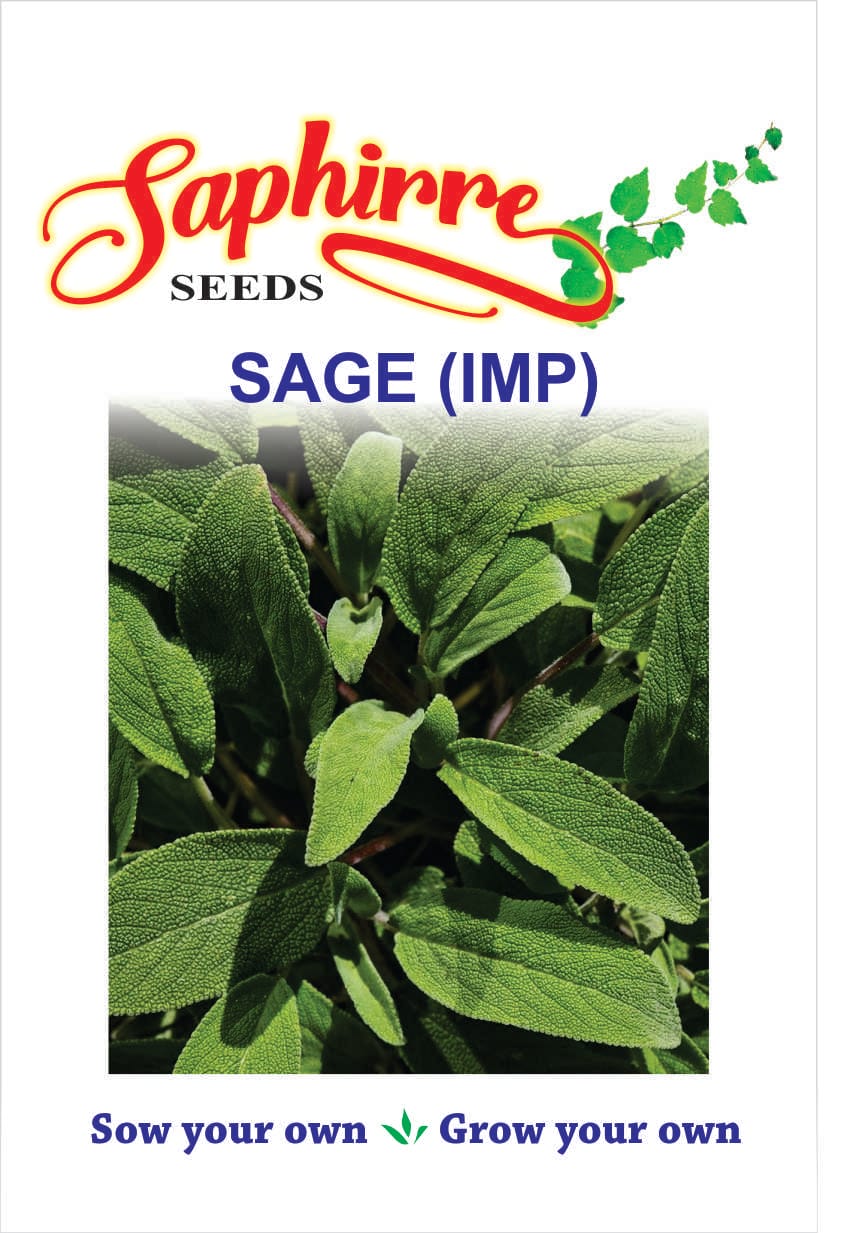









The Complete Guide to Sage (Salvia officinalis)
If you are looking for an herb that combines ancient history with modern culinary convenience, Sage is your ultimate choice. The name “sage” comes from the Latin salvia, meaning “to save,” a nod to its long-standing reputation as a medicinal savior throughout the ages. With its unique, velvety, silvery-green foliage and vibrant purple flowers, sage is as beautiful as it is functional, serving as both an ornamental landscape plant and a foundational herb for Mediterranean-inspired cuisine.
Planting sage seeds is an investment in your garden’s long-term health. This perennial herb is built to last, often returning season after season to provide a bounty of aromatic leaves for your kitchen. It is the perfect project for the gardener who wants an “overachiever” that demands very little in return for its generous output. Whether you are using it to season a holiday roast, infusing it into oils, or simply enjoying the earthy fragrance it adds to your garden, sage is a staple that never goes out of style.
Why Grow Sage?
Culinary Star: Its earthy, robust flavor is the secret behind the best poultry, pork, and sausage dishes. It’s the “wise friend” that brings balance and depth to your cooking.
Eco-Friendly Perennial: Because it loves “lean” soil and is drought-resistant, it is a sustainable choice that reduces your reliance on water and chemicals.
Pollinator Magnet: Its lovely, nectar-rich flowers attract bees and butterflies, turning your garden into a buzzing, healthy hub of biodiversity.
Natural Guardian: It acts as a friendly companion to other vegetables, naturally creating a harmonious garden ecosystem.
Quick Growing Specifications
Step-by-Step Planting & Care Guide
Growing sage is straightforward and incredibly rewarding:
Sowing: Plant seeds 1/4 inch deep. Give them plenty of room—sage likes to grow large, so 12–24 inches of space is ideal for it to reach its full potential.
Sunlight: Give it a sunny home. Sage thrives on at least 6 hours of daily sunlight; it’s the secret to those intensely flavorful, aromatic leaves.
Watering: Don’t “hover” over it. Water when the soil is dry, but always allow it to dry out fully between sessions to prevent root rot.
Pruning: “Snip, snip!” Regular pruning is your “secret weapon” to keep the plant from getting too woody and to encourage that thick, bushy growth that yields the most leaves.
Feeding: Skip the heavy fertilizer. Sage actually prefers “nutrient-poor” soil, so use fertilizer very sparingly, if at all.
Winterizing: Mulching around the base in the winter helps protect the roots if you live in a colder climate.
Lifestyle & Design Uses: A Multi-Sensory Star
Aromatic Wellness: Keep fresh sage in a vase or near your study area—its grounding, earthy scent is traditionally used in aromatherapy to help clear the mind and boost concentration.
Landscape Elegance: With its beautiful, textured foliage, sage can be used as a “living border” that adds color and contrast to your garden design.
Companion Harmony: Plant it alongside rosemary, thyme, or tomatoes. They create a “botanical buddy system” that enhances your overall garden health and minimizes pest problems.
Follow-up: Since sage grows into a beautiful, large woody perennial, would you like tips on how to prune it to maintain a specific size, or are you looking for a traditional recipe to use your first fresh harvest in a holiday-inspired dish?


Reviews
There are no reviews yet.