
Discover everything you need to know about Areca Palm care! Learn how to water, get rid of brown tips, and keep this pet-friendly tropical indoor plant thriving.
Have you ever walked into a room and instantly felt a wave of calm wash over you, just because of a single, majestic plant in the corner? If you’re looking to transform a dull, lifeless space into a lush, tropical oasis, you need to meet the Areca Palm.
With its feathery, arching fronds and golden-green stems, this plant doesn’t just decorate a room—it brings it to life. Whether you live in a tiny apartment or a spacious suburban home, the Areca Palm invites the relaxing energy of a beachside resort right into your living room. Let’s dive into everything you need to know about growing and caring for this tropical superstar!
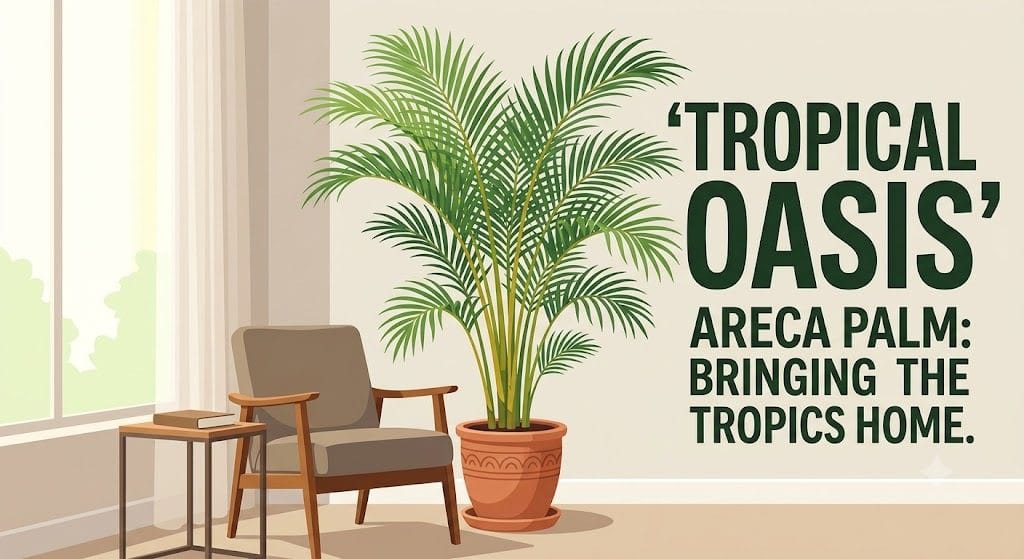
Quick Overview
The Areca Palm, scientifically known as Dypsis lutescens, is a wildly popular indoor houseplant cherished for its dramatic, arching leaves that resemble butterfly wings. Plant lovers adore it not only because it looks stunning, but also because it is relatively easy to care for and grows quite large indoors. It’s the ultimate statement plant that fills empty corners with vibrant, natural energy while quietly purifying the air you breathe.
3. Plant Specifications
Here is a quick snapshot of what you need to know before bringing an Areca Palm home:
| Specification | Details |
| Botanical Name | Dypsis lutescens (formerly Chrysalidocarpus lutescens) |
| Common Name | Areca Palm, Butterfly Palm, Golden Cane Palm, Yellow Palm |
| Family | Arecaceae |
| Plant Type | Evergreen perennial / Palm |
| Origin | Madagascar |
| Mature Height | 6–10 feet (Indoors), up to 30 feet (Outdoors) |
| Mature Width | 3–5 feet |
| Growth Rate | Fast (in ideal spring/summer conditions) |
| Lifespan | 10–15 years indoors with good care |
| Toxicity | Non-toxic (100% Pet-friendly!) |
| Difficulty Level | Easy to Moderate |
4. Plant History
The story of the Areca Palm is as fascinating as it is beautiful. Originally hailing from the exotic island of Madagascar, this plant thrives natively in the moist, warm forests along riverbanks.
In a heartbreaking twist of irony, while it is one of the most widely cultivated and loved houseplants around the globe, it is currently considered endangered in its natural wild habitat due to deforestation. It was introduced to the rest of the world as an ornamental plant in the late 19th and early 20th centuries. The nickname “Golden Cane Palm” comes from its distinct, bamboo-like yellow stems that develop beautifully as the plant matures.
5. Why You’ll Love This Plant ❤️
There are so many reasons to fall head over heels for the Areca Palm:
- The Instant Tropics: It instantly makes your home feel like a luxury spa or a Hawaiian retreat.
- Air Purifying Powerhouse: It’s a natural filter that cleans your indoor air.
- Safe for Fur Babies: You never have to worry about your cats or dogs taking a nibble; it’s completely non-toxic.
- Incredible Volume: It naturally grows in clusters, meaning one pot will give you a thick, bushy canopy of green.
6. Growing Instructions
Setting your Areca Palm up for success right from the beginning will save you a lot of headaches later!
- Best climate: Warm and humid. Think tropical!
- Pot selection: A pot with generous drainage holes is non-negotiable. Terracotta is great as it pulls away excess moisture, but plastic works fine if you are careful not to overwater.
- Soil mix: A well-aerated, peat-based potting mix with plenty of perlite for drainage.
- Watering: Keep the soil consistently lightly moist, but never let it sit in a puddle of water.
- Fertilizer: Feed it with a liquid houseplant fertilizer during the spring and summer.
- Temperature: Keep it cozy between 65°F to 75°F (18°C – 24°C).
- Humidity: High humidity is its best friend.
- Repotting: Repot every 2–3 years. They actually prefer to be slightly rootbound!
- Growth speed: Moderate to fast during the warmer months.
7. Plant Care Guide
Taking care of an Areca Palm is all about consistency. Once you find its “sweet spot,” it will reward you with rapid growth.
- Watering schedule: Typically once a week, but always check the top 2 inches of soil first. If it’s dry, it’s time to water.
- Fertilizer routine: Feed once a month from spring through early fall. Skip fertilizing entirely in the winter.
- Cleaning leaves: Dust acts like sunscreen, blocking light! Gently wipe the fronds with a damp microfiber cloth every few weeks.
- Pruning: It’s perfectly natural for the lowest, oldest fronds to turn brown and die off as the plant grows. Simply snip them off near the soil line with clean, sharp shears.
- Pest prevention: Keep the leaves clean and the humidity up to naturally deter pests.
- Seasonal care: In winter, growth will slow down. Reduce your watering frequency and keep the plant far away from cold drafts and heating vents.
8. Sunlight Requirements ☀️
Lighting can make or break your Areca Palm.
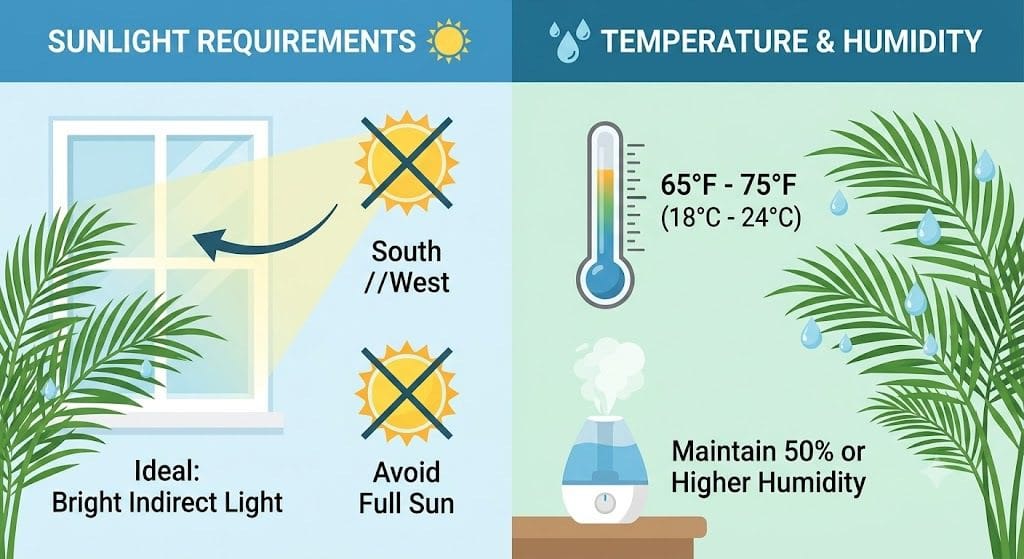
- Bright Indirect Light (Ideal): This is exactly what the plant craves. Place it near a South or West-facing window where it gets plenty of light, but the harsh sun rays don’t hit the leaves directly.
- Full Sun: Avoid this! Direct, intense sunlight will scorch the delicate fronds and turn them yellow or crispy brown.
- Partial Sun: A little gentle morning sun from an East-facing window is perfectly fine.
- Low Light: While it might survive for a while in a dark corner, it will stop growing, become leggy, and eventually decline.
9. Water Requirements 💧
Watering an Areca Palm requires a bit of balance—it loves moisture but hates wet feet.
- How often to water: Water thoroughly when the top 1 to 2 inches of the soil feel dry to the touch. Let the water run out the bottom of the pot, and then empty the saucer.
- Signs of overwatering: If the entire leaf or stem starts turning yellow, or the base of the plant feels mushy, you are giving it too much water. This can lead to fatal root rot.
- Signs of underwatering: Crispy, brown tips on the leaves and a general drooping or wilting of the fronds mean your palm is thirsty.
10. Soil Requirements
Your potting mix is the foundation of your plant’s health.
- Soil pH: The Areca Palm prefers slightly acidic soil, ideally with a pH between 6.1 and 6.5.
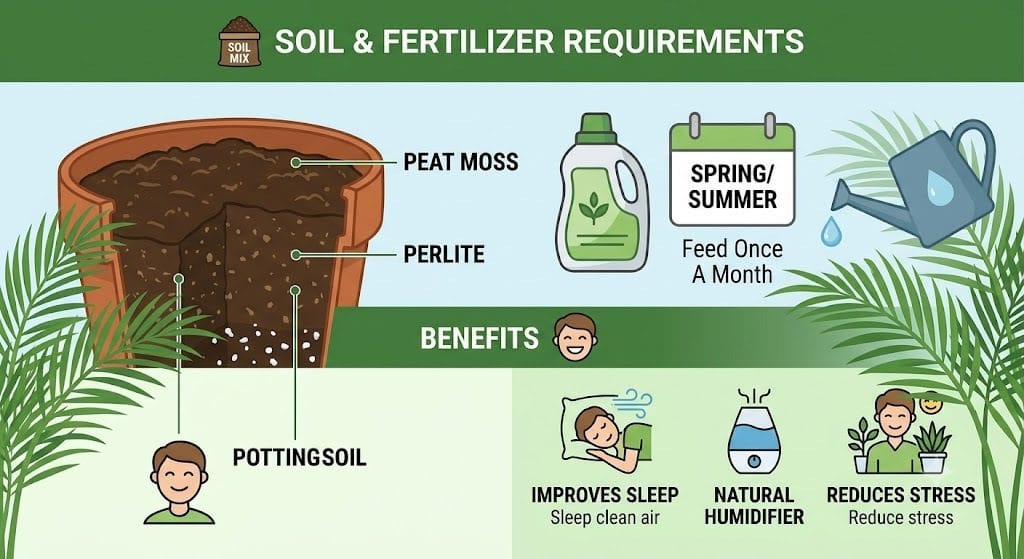
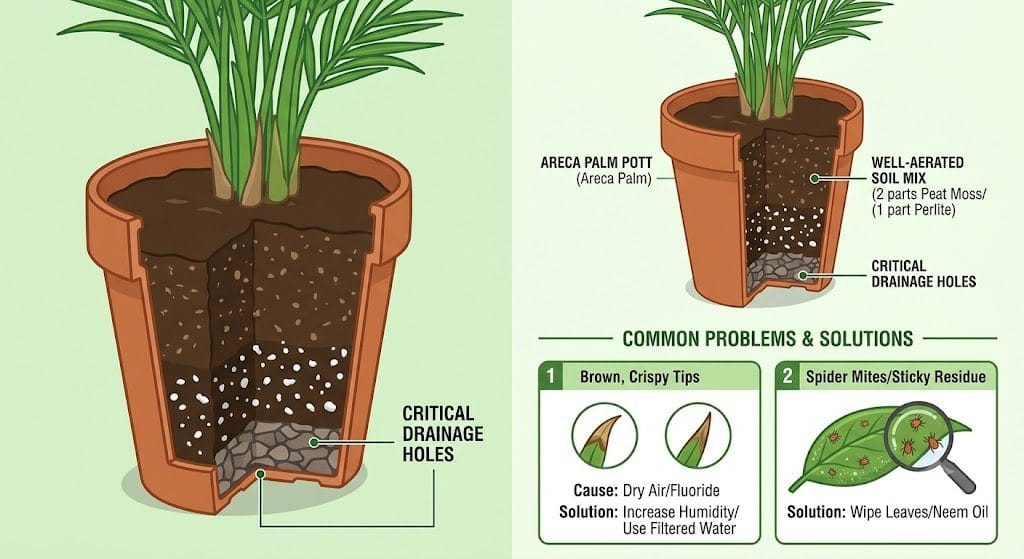
- Best potting mix: Create a blend of 2 parts peat moss (or coco coir) and 1 part perlite or coarse sand.
- Drainage needs: Excellent drainage is critical. The roots must be able to breathe, or they will suffocate and rot.
11. Temperature & Humidity
Imagine the weather in Madagascar. That is what your palm wants!
- Temperature: Maintain room temperatures between 65°F and 75°F (18°C – 24°C). Keep it away from AC units, drafty windows, and radiators. Sudden temperature drops below 50°F (10°C) can cause severe damage.
- Humidity: Areca Palms absolutely crave high humidity (50% or higher). If your home is dry, especially in the winter, use a humidifier nearby or place the pot on a tray filled with pebbles and water (ensuring the pot sits on the pebbles, not in the water).
12. Fertilizer Guide
Because they grow quite fast in the right conditions, they are heavy feeders.
- Which fertilizer: A balanced, water-soluble houseplant fertilizer, or one specifically formulated for palm trees (which will contain extra magnesium, iron, and potassium).
- Frequency: Once a month.
- Best season: Only fertilize during the active growing season (Spring and Summer). Stop in Fall and Winter.
13. Easy Care Tips
Here are 10 practical tips to keep your Butterfly Palm thriving:
- Use Filtered Water: Areca Palms are sensitive to fluoride and chlorine in tap water, which causes brown tips. Use filtered water or leave tap water out overnight.
- Don’t Rush to Repot: They like being a little squished in their pots.
- Rotate the Pot: Give it a quarter turn every week so it grows evenly toward the light.
- Group Plants Together: Grouping plants naturally raises the ambient humidity around them.
- Never Let it Sit in Water: Always empty the drip tray 15 minutes after watering.
- Watch for Yellowing: Yellowing older leaves is normal; yellowing new leaves means a watering issue.
- Mist Occasionally: While not a substitute for a humidifier, misting helps keep leaves dust-free.
- Check the Stems: Healthy stems have dark speckles—don’t mistake these natural markings for pests!
- Avoid Drafts: Keep it away from open doors during winter.
- Be Gentle: The growing tips (the center where new leaves emerge) are very delicate. Don’t pull on them.
14. Common Problems & Solutions
Even the most beautiful plants run into trouble. Here is how to fix it:
| Problem | Cause | Solution |
| Brown, crispy leaf tips | Dry air, underwatering, or fluoride in tap water. | Increase humidity, water more consistently, switch to filtered/rain water. |
| Yellowing leaves all over | Overwatering or poor drainage causing root suffocation. | Check drainage holes, let the soil dry out more between waterings. |
| Drooping fronds | Underwatering or severe root-bound stress. | Give it a thorough soak. If roots are circling out of the pot, it’s time to repot. |
| White webs or sticky residue | Spider mites or mealybugs. | Wipe leaves with a damp cloth, treat with Neem oil or insecticidal soap. |
15. Uses of the Plant
The Areca Palm is incredibly versatile:
- Home decoration: Perfect for filling large, empty corners with a burst of life.
- Office decoration: Softens harsh office environments and reduces stress.
- Balcony: Can be kept on shaded or covered balconies in warm climates.
- Landscaping: A fantastic privacy screen outdoors in tropical zones (USDA zones 10-11).
- Indoor use: It is widely considered one of the best large-scale interior design plants.
16. Air Purification 🌿
If you love breathing clean air, you will love this plant. The Areca Palm was heavily featured in the famous NASA Clean Air Study.
- Does it improve air quality? Absolutely. It is highly efficient at adding moisture to the indoor air (acting like a natural humidifier) and pulling toxins out.
- Pollutants reduced: It actively helps remove harmful VOCs (Volatile Organic Compounds) such as formaldehyde, xylene, and toluene from the air.
17. Pet Friendly? 🐶🐱
Great news for animal lovers!
- Safe for Dogs? Yes.
- Safe for Cats? Yes.
- Toxicity level: 100% Non-toxic.
- Precautions: While it won’t poison them, the sweeping, grass-like leaves are highly tempting for cats to bat at and chew on. Ingesting too much fibrous plant material might give your pet a mild upset stomach, so try to discourage them from using it as a salad bar.
18. Best Places to Keep This Plant in Your Home 🏡
Positioning is everything for this dramatic plant:
- Living Room: A corner near a bright window is perfect. It adds architectural height and acts as a living piece of art.
- Bedroom: Fantastic for bedrooms because its air-purifying and humidifying qualities can help you sleep better.
- Bathroom: If you have a large, frosted window, the high humidity of a bathroom makes it an absolute paradise for the palm.
- Office Desk / Study Room: Placing one nearby reduces eye strain and mental fatigue, bringing a slice of nature to your workspace.
19. Tropical Vibes 🌴
There is a reason interior designers constantly use the Areca Palm in coastal, bohemian, and modern-tropical designs. The plant grows in thick, lush clusters, creating an umbrella-like canopy of arching fronds. Every time the AC kicks on or a gentle breeze comes through an open window, the leaves sway and rustle softly, instantly transporting your mind to a quiet beach house.
20. Fun Facts
Prepare to be amazed by these botanical tidbits:
- It is called the “Butterfly Palm” because the leaves curve gracefully upwards, resembling butterfly wings in flight.
- An Areca Palm can transpire up to 1 liter of water a day, making it an incredible natural humidifier!
- The yellow/golden hue of the stems is entirely natural and healthy, which is why it’s called the Golden Cane Palm.
- They grow in clusters from multiple seeds planted together, not from a single trunk.
- In the wild, they can produce small, pale yellow flowers and dark, inedible fruits.
- Despite its massive global popularity, it is a threatened species in its native Madagascar.
- The Royal Horticultural Society gave it the prestigious Award of Garden Merit.
- Its scientific name lutescens literally translates to “growing yellow” in Latin.
21. Benefits
To summarize, here is why you need an Areca Palm:
- Air Filtration: Removes toxic chemicals from your home.
- Natural Humidifier: Adds healthy moisture to dry indoor air.
- Mental Health: Studies show that large, leafy green plants reduce stress and anxiety.
- Safety: Zero risk to curious pets or small children.
- Aesthetic Appeal: Elevates any room from boring to breathtaking.
22. Is This Plant Good for Beginners?
Yes, but with a slight learning curve. It is not quite a “set it and forget it” plant like a ZZ Plant or Snake Plant. The Areca Palm requires you to pay attention to its watering needs and provide decent humidity. However, it is very communicative. If it’s unhappy, it will tell you quickly (usually via brown tips), giving you plenty of time to correct your mistakes before any real damage is done.
23. Frequently Asked Questions (FAQs)
1. Why are the tips of my Areca Palm turning brown? Brown tips are the most common issue and are usually caused by low humidity, underwatering, or using tap water with high fluoride/chlorine.
2. How often should I water my Areca Palm? Roughly once a week. Let the top 2 inches of soil dry out completely before watering again.
3. Does the Areca Palm need direct sunlight? No, direct sunlight will scorch the leaves. It prefers bright, indirect light.
4. How fast does an Areca Palm grow indoors? In ideal conditions with proper light and fertilizer, it can grow 6 to 10 inches a year.
5. Should I cut off the brown tips? Yes, you can trim the brown tips off with clean scissors. Just be careful not to cut into the healthy green part of the leaf, or the brown tip will just return!
6. Is the Areca Palm toxic to cats? No, the Areca Palm is completely non-toxic and safe for both cats and dogs.
7. Why are the stems of my palm turning yellow? If the base of the stems is golden/yellow but firm, that is perfectly natural! If the stems are yellow and mushy, that is a sign of root rot from overwatering.
8. Can I keep my Areca Palm in the bedroom? Absolutely. It’s highly recommended for bedrooms as it purifies the air and acts as a natural humidifier.
9. How do I make my Areca Palm bushier? Ensure it receives plenty of bright indirect light and fertilize it regularly during the spring and summer to encourage robust new growth.
10. When should I repot my Areca Palm? Only every 2 to 3 years. They prefer to be slightly rootbound, so only size up your pot by about 2 inches when you do.
24. Final Verdict
If you have a bright spot in your home and a desire to bring a bold, tropical aesthetic indoors, the Areca Palm is an absolute must-have. While it requires a bit of consistency with watering and a love for humidity, the payoff is massive. It will transform your space, clean your air, and provide years of peaceful, leafy beauty without posing any risk to your pets.