
Learn how to care for a Snake Plant (Mother-in-Law’s Tongue)! Discover watering tips, sunlight needs, and how this unkillable plant purifies your indoor air.
Have you ever wished for a houseplant that thrives on neglect, looks incredibly stylish, and cleans the air while you sleep? If you frequently forget to water your plants or feel like you don’t have a “green thumb,” you are about to meet your new best friend.
The Snake Plant is widely considered the most indestructible houseplant in the world. With its striking, sword-like leaves standing tall and proud, it brings a bold, modern edge to any room without demanding a fraction of the attention most houseplants require. Let’s explore why this tough-as-nails beauty deserves a spot in your home.https://plantroopan.com/product/sansevieria-trifasciata-snake-plant/
2. Quick Overview
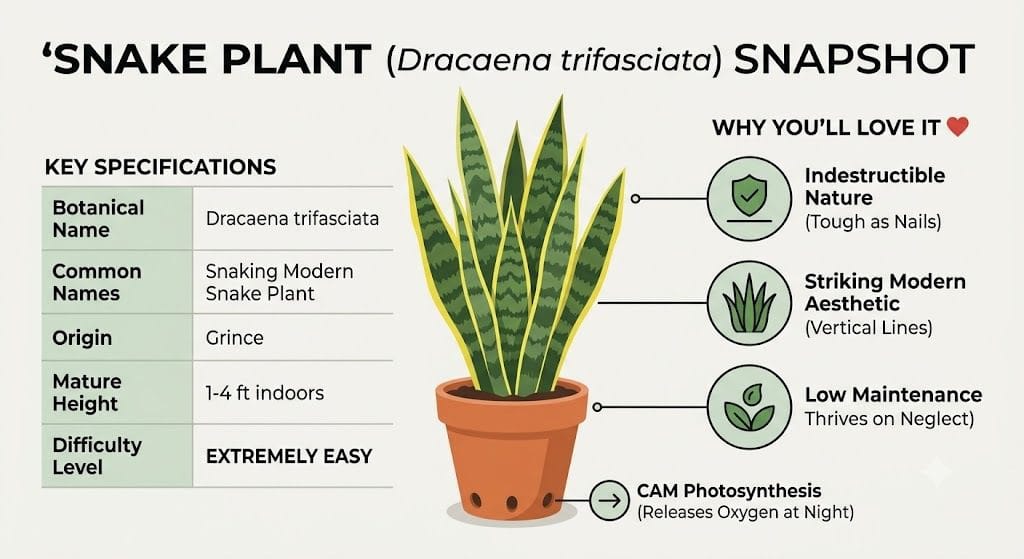
The Snake Plant, scientifically known as Dracaena trifasciata (formerly Sansevieria trifasciata), is a resilient succulent native to West Africa. It is beloved for its stiff, upright leaves that often feature dramatic yellow edges and dark green banding. Whether you place it in a bright, sunlit office or a dim, forgotten corner of your bedroom, the Snake Plant will silently adapt and continue to grow, all while working overtime to filter indoor air pollutants.
3. Plant Specifications
Here is a quick snapshot of what you need to know about this unkillable warrior:
| Specification | Details |
| Botanical Name | Dracaena trifasciata |
| Common Name | Snake Plant, Mother-in-Law’s Tongue, Viper’s Bowstring Hemp |
| Family | Asparagaceae |
| Plant Type | Evergreen succulent perennial |
| Origin | West Africa (Nigeria to the Congo) |
| Mature Height | 1 to 4 feet indoors (up to 8 feet in the wild) |
| Mature Width | 1 to 2 feet |
| Growth Rate | Slow to Moderate |
| Lifespan | 10 to 25+ years |
| Toxicity | Mildly toxic to cats and dogs |
| Difficulty Level | Extremely Easy (Perfect for Beginners) |
4. Plant History
The Snake Plant originates from the dry, rocky regions of West Africa. Because of its incredibly tough plant fibers, indigenous populations historically used it to make bowstrings, earning it the nickname “Viper’s Bowstring Hemp.”
For decades, the botanical community knew this plant as Sansevieria trifasciata. However, in 2017, after deep DNA sequencing, scientists discovered it was genetically closer to the Dracaena family (the same family as the popular Dragon Tree) and officially renamed it. Despite the official name change, almost the entire gardening world still lovingly refers to it as a Sansevieria or simply the Snake Plant!
5. Why You’ll Love This Plant ❤️
There are so many reasons this plant is a staple in homes and offices worldwide:
- Virtually Indestructible: It is incredibly forgiving if you forget to water it or place it in a low-light area.
- Striking Architecture: The rigid, vertical leaves create clean, modern lines that interior designers love.
- Nighttime Oxygen: Unlike most plants, it releases oxygen at night, making it the perfect bedroom companion.
- Low Maintenance: No pruning, no daily misting, and very little feeding required.
6. Growing Instructions
Setting your Snake Plant up for success is incredibly simple. The golden rule is: less is more.
- Best climate: Warm and dry. It thrives in typical indoor temperatures.
- Pot selection: A terracotta or porous clay pot is ideal. These materials pull excess moisture away from the roots, preventing rot.
- Soil mix: A fast-draining cactus or succulent potting mix is essential.
- Watering: Allow the soil to dry out completely—100%—between waterings.
- Fertilizer: It requires very little food. A light feeding twice a year is plenty.
- Temperature: Keep it between 65°F to 85°F (18°C – 29°C).
- Humidity: Normal room humidity is perfect. It actually prefers drier air, so no need for humidifiers!
- Repotting: They love being rootbound. Only repot every 3 to 5 years when the roots literally start breaking the pot.
- Growth speed: Slow. It will grow slightly faster if placed in bright, indirect light.
7. Plant Care Guide
Taking care of a Snake Plant means leaving it alone most of the time!
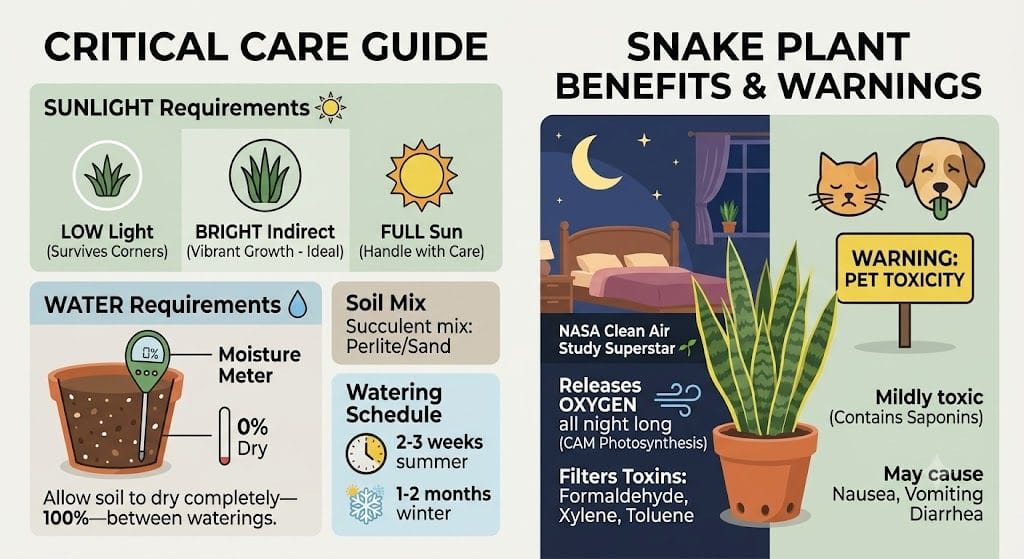
- Watering schedule: Once every 2 to 3 weeks in the summer, and once every 1 to 2 months in the winter.
- Fertilizer routine: Use an all-purpose houseplant fertilizer diluted to half-strength once in the spring and once in the summer.
- Cleaning leaves: Because the leaves are wide and flat, they collect dust. Wipe them down with a damp cloth once a month so the plant can photosynthesize properly.
- Pruning: No pruning is necessary. If a leaf gets damaged, you can simply cut it off at the soil line with clean shears.
- Pest prevention: They are highly pest-resistant. Overwatering is their only real enemy.
- Seasonal care: In the cooler winter months, the plant goes dormant. Drastically reduce watering during this time.
8. Sunlight Requirements ☀️
The Snake Plant is famous for its adaptability, making it perfect for almost any room.
- Bright Indirect Light (Ideal): This is where the plant will grow the fastest and display the most vibrant, contrasting colors on its leaves.
- Full Sun: It can handle a few hours of direct morning or late afternoon sun, especially in cooler climates, but harsh midday sun might scorch the leaves.
- Partial Sun: Excellent. It will thrive happily.
- Low Light: The Snake Plant is famous for surviving in dark corners, windowless offices, and bathrooms. It won’t grow much, but it will stay green and healthy for years!
9. Water Requirements 💧
This is a succulent, meaning it stores water in its thick, fleshy leaves.
- How often to water: Only when the soil is completely bone-dry all the way to the bottom of the pot.
- Signs of overwatering: If the leaves turn yellow, feel soft and mushy at the base, or start flopping over, you are giving it too much water. This causes root rot, which is fatal.
- Signs of underwatering: It is very hard to underwater this plant, but if the leaves start looking wrinkled, deeply creased, or crispy at the tips, give it a good soak.
10. Soil Requirements
Because overwatering is the biggest threat, your soil mix is critical.
- Soil pH: They prefer slightly acidic to neutral soil, around 5.5 to 7.0.
- Best potting mix: A commercial cactus or succulent mix is perfect. If you are mixing your own, use 1 part regular potting soil, 1 part coarse sand, and 1 part perlite.
- Drainage needs: Extreme. The pot must have drainage holes. Water should flow through the soil and out the bottom within seconds.
11. Temperature & Humidity
Snake Plants are desert natives at heart, making them incredibly hardy in varied climates (especially in warm regions like India during the dry summer heat!).
- Temperature: They are happiest in warm conditions (65°F to 85°F). Keep them away from cold drafts or AC vents. Extended exposure to temperatures below 50°F (10°C) will damage the plant.
- Humidity: Average household humidity (30% to 50%) is perfect. They do not need, and actively dislike, overly humid, stagnant air.
12. Fertilizer Guide
Snake Plants are very light feeders.
- Which fertilizer: Any standard liquid houseplant fertilizer or succulent food.
- Frequency: Once in the spring and once in mid-summer.
- Best season: Never fertilize in the fall or winter when the plant is dormant.
13. Easy Care Tips
Here are 10 quick tips for beginners to ensure absolute success:
- Ignore It: The more you forget about it, the better it grows.
- Use Terracotta: Clay pots breathe, helping the soil dry out faster.
- Don’t Pour Water in the Rosette: Always water the soil, not the center of the leaves, to prevent rot.
- Heavy Pots are Better: The tall leaves can make the plant top-heavy; a sturdy ceramic or clay pot prevents tipping.
- Dust the Leaves: Keep the leaves clean so they can absorb light efficiently.
- Embrace the Squeeze: Don’t repot until the roots are literally pushing their way out of the pot.
- Propagate the Pups: The plant will naturally grow little babies (pups) next to the main plant. You can cut these off and plant them in new pots!
- Check the Soil Depth: Use a wooden chopstick to check if the soil is dry all the way to the bottom before watering.
- Don’t Fret Over Slow Growth: It is naturally a slow-growing plant, especially in low light.
- Skip the Winter Water: You might only need to water it once or twice the entire winter.
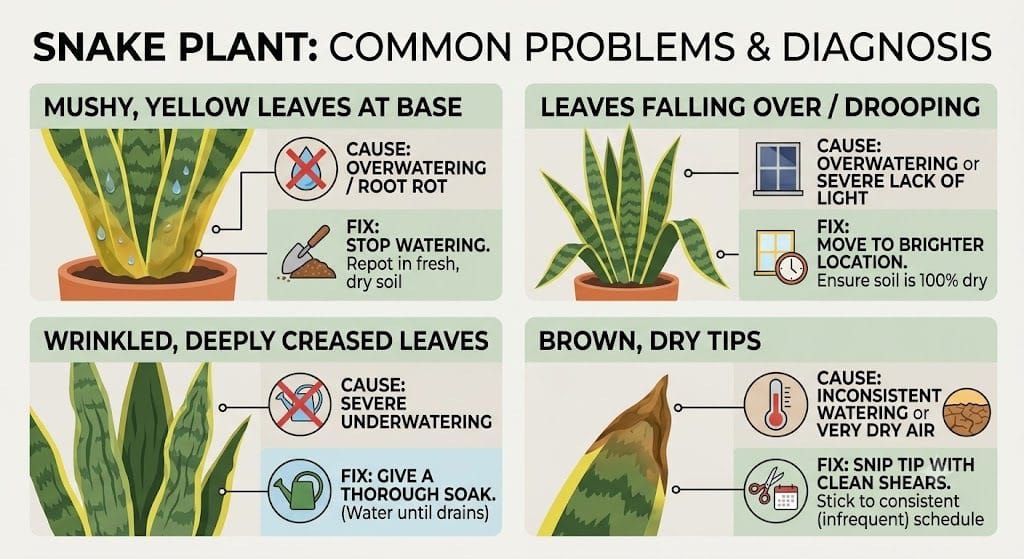
14. Common Problems & Solutions
While they are incredibly tough, they aren’t completely invincible.
| Problem | Cause | Solution |
| Mushy, yellowing leaves at the base | Overwatering / Root Rot | Stop watering immediately. Remove mushy leaves, check roots, and repot in fresh, dry soil. |
| Leaves falling over/bending | Overwatering or severe lack of light | Move to a brighter location. Ensure the soil is completely drying out between waterings. |
| Wrinkled, folded leaves | Severe underwatering | Give the plant a thorough soak until water drains from the bottom. |
| Brown, dry tips | Inconsistent watering or very dry air | Trim the very tip with clean scissors. Stick to a more regular (but infrequent) watering schedule. |
15. Uses of the Plant
The architectural structure of this plant makes it a favorite for many spaces:
- Bedroom decoration: The ultimate nighttime air purifier.
- Office decoration: Thrives under fluorescent lights and requires minimal care over long weekends.
- Modern Landscaping: Excellent for creating structural lines in warm-climate gardens or patios.
- Feng Shui: Placed near the entrance, it is believed to guard the home against negative energy.
16. Air Purification 🌿
This plant is an absolute superstar when it comes to indoor air quality!
- Does it improve air quality? Yes, it is heavily featured in the famous NASA Clean Air Study.
- Which pollutants it reduces: It has been proven to remove toxins such as formaldehyde, xylene, toluene, and nitrogen oxides from the air.
- The Nighttime Advantage: Most plants release carbon dioxide at night. The Snake Plant uses a process called Crassulacean Acid Metabolism (CAM), meaning it absorbs carbon dioxide and releases pure oxygen all night long!
17. Pet Friendly? 🐶🐱
Caution is needed here.
- Safe for Dogs? No.
- Safe for Cats? No.
- Toxicity level: Mildly to moderately toxic. The plant contains saponins, which are natural chemical compounds designed to protect the plant from insects and fungi.
- Precautions: If chewed or ingested by pets, it can cause excessive drooling, nausea, vomiting, and diarrhea. Because the leaves are stiff and not very grassy, most pets ignore it, but keep it out of reach of chew-happy puppies and kittens.
18. Best Places to Keep This Plant in Your Home 🏡
- Bedroom: The absolute best spot due to its nighttime oxygen production.
- Living Room: Great for empty corners or placed next to modern furniture to add vertical height.
- Office Desk: It happily handles the dry air and artificial lighting of office environments.
- Entrance/Foyer: A welcoming, structural piece that requires very little natural light to survive.
19. Tropical Vibes 🌴
While we often associate “tropical” with lush, sweeping palms, the Snake Plant brings a different kind of exotic energy. It provides a sharp, minimalist, arid aesthetic. It pairs beautifully with woven baskets, concrete planters, and modern mid-century decor, bringing a clean, structural desert vibe to your indoor jungle.
20. Fun Facts
- It is frequently called “Mother-in-Law’s Tongue” because of its sharp, pointed leaves!
- It uses CAM photosynthesis, an evolutionary adaptation that allows it to keep its pores closed during the hot day to prevent water loss, opening them only at night to exchange gases.
- In Nigeria, it is linked to the Orisha (spirit) of agriculture and war, Ogun.
- If you propagate a Snake Plant by cutting a leaf and rooting it in water, the new baby plant will lose its yellow edges and grow up completely green!
- It was used historically in Africa to make bandages and bowstrings because of its incredibly strong fibers.
- The plant can survive for weeks without a single drop of water.
- Despite its tough exterior, it can produce delicate, strongly fragrant white flowers in the wild (or when highly stressed indoors).
- It is one of the few plants that can actively pull formaldehyde out of the air.
21. Benefits
- Indestructible Nature: Survives neglect, low light, and drought.
- Air Purification: Filters out harmful household chemicals.
- Sleep Aid: Releases oxygen all night long.
- Aesthetic Appeal: Modern, architectural look that fits any decor.
- Easy Propagation: Very easy to multiply and share with friends.
22. Is This Plant Good for Beginners?
Yes. It is arguably the best plant for beginners in the world. If you have ever killed a plant before, start here. The Snake Plant thrives on being ignored. As long as you resist the urge to overwater it, it will live for decades, growing slowly and steadily in the background of your life.
23. Frequently Asked Questions (FAQs)
1. Why are my Snake Plant leaves falling over? Leaves falling over or drooping is almost always a sign of overwatering and root rot. It can also happen if the plant is in a pitch-black room for too long.
2. How often should I water my Snake Plant? Only when the soil is 100% dry. This usually means once every 2-3 weeks in summer, and once every 4-6 weeks in winter.
3. Does the Snake Plant need sunlight? It is highly adaptable! It prefers bright indirect light but will happily survive in low-light corners where most other plants would die.
4. Can I propagate a Snake Plant? Yes! You can easily propagate them by dividing the root clump when repotting, or by cutting a leaf into sections and placing them in water or soil.
5. Why are the tips of my Snake Plant brown and dry? This is usually caused by inconsistent watering or extreme underwatering. Once a tip is brown, it won’t turn green again, but you can safely snip it off.
6. Is the Snake Plant safe for cats and dogs? No, it contains saponins which can cause nausea, vomiting, and diarrhea if ingested by pets.
7. Should I mist my Snake Plant? No! Snake plants prefer dry air. Misting can lead to fungal issues and leaf rot.
8. How fast does a Snake Plant grow? They are generally slow growers, pushing out a few new leaves each growing season.
9. What kind of soil does a Snake Plant need? A very well-draining soil, like a cactus or succulent mix. Regular potting soil holds too much moisture.
10. Do Snake Plants really purify the air? Yes, NASA studies have confirmed that they are excellent at removing toxins like formaldehyde and benzene from indoor air, and they uniquely release oxygen at night.
24. Final Verdict
The Snake Plant is the ultimate “set it and forget it” houseplant. If you want the aesthetic beauty of indoor greenery and the health benefits of clean air, but you simply don’t have the time or energy for a high-maintenance plant, the Snake Plant is exactly what you need. Buy one, put it in a nice pot, water it once a month, and enjoy!