
Master Fiddle Leaf Fig care with our complete guide! Learn how to water, fix brown spots, and encourage your Ficus lyrata to branch out and grow massive leaves.
If you’ve scrolled through an interior design magazine, watched a home makeover show, or browsed a trendy lifestyle blog anytime in the last decade, you already know this plant. The Fiddle-leaf Fig is the undisputed superstar of the houseplant world.
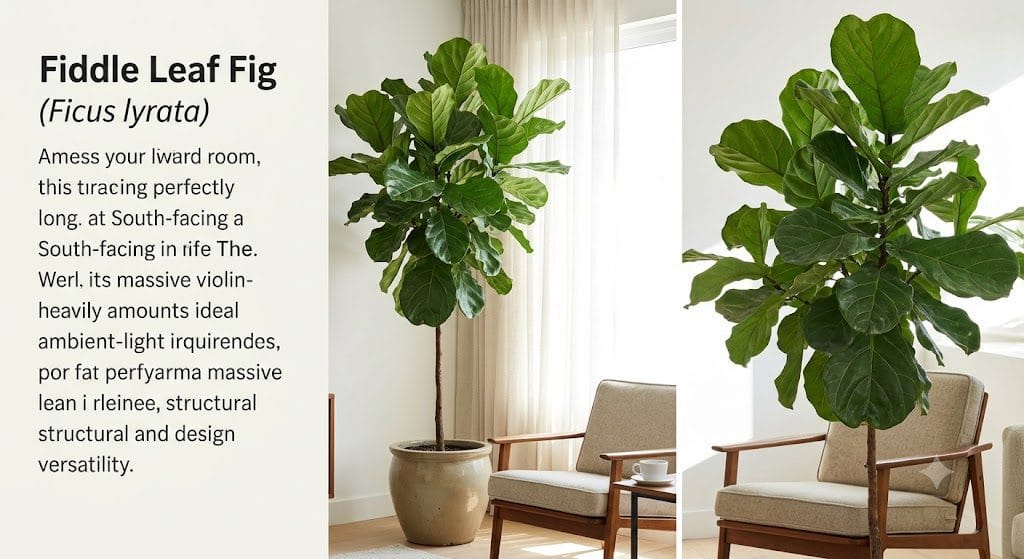
With its massive, violin-shaped, heavily veined leaves and striking tree-like structure, it acts as a living sculpture that can instantly elevate the aesthetic of any room. But let’s be completely honest—it has a reputation for being a bit of a diva! If you move it to the wrong corner or overwater it, it might dramatically drop its leaves. Don’t let that scare you, though. Once you understand the “rules” of the Fiddle-leaf Fig, it is surprisingly manageable and deeply rewarding to grow. Let’s unlock the secrets to keeping this trendy giant happy and thriving!
2. Quick Overview
The Fiddle-leaf Fig, scientifically known as Ficus lyrata, is a broadleaf evergreen tree native to the tropical rainforests of West Africa. It earned its common name because its massive leaves beautifully resemble the shape of a fiddle or violin. As an indoor plant, it is prized for its dramatic volume and structural, upright growth. While it requires a bit more attention to light and watering than a beginner plant like a Pothos, its breathtaking visual impact makes it entirely worth the effort.
3. Plant Specifications
Here is a quick snapshot of what you need to know about this iconic indoor tree:
| Specification | Details |
| Botanical Name | Ficus lyrata |
| Common Name | Fiddle-leaf Fig, Banjo Fig |
| Family | Moraceae (Fig family) |
| Plant Type | Evergreen broadleaf tree |
| Origin | West Africa (Cameroon to Sierra Leone) |
| Mature Height | 6 to 10 feet indoors (can reach 50 feet in the wild) |
| Mature Width | 2 to 3 feet indoors |
| Growth Rate | Fast (when in ideal bright light) |
| Lifespan | 10 to 15+ years indoors |
| Toxicity | Toxic to cats, dogs, and humans if ingested |
| Difficulty Level | Moderate to Advanced |
4. Plant History
The Fiddle-leaf Fig hails from the lowland tropical rainforests of West Africa. In its natural habitat, it doesn’t always start in the soil! It is an epiphyte (or banyan fig), meaning a seed might germinate high up in the canopy of another tree. It will then send long aerial roots down to the ground, eventually strangling the host tree and standing on its own.
While it has been grown as a houseplant for decades, it experienced an unprecedented explosion in popularity in the 2010s. Driven by platforms like Pinterest and Instagram, interior designers fell in love with its bold, structural look, dubbing it the “it plant” of the modern era.
5. Why You’ll Love This Plant ❤️
There are incredibly compelling reasons why this plant took the world by storm:
- The “Wow” Factor: No other indoor plant brings quite as much architectural drama and living scale to a room.
- Massive Foliage: The leaves can grow up to 15 inches long and 10 inches wide, creating a dense, lush canopy.
- Design Versatility: It looks equally stunning in a sleek mid-century modern living room as it does in a cozy, bohemian bedroom.
- Air Purifying: Those massive leaves act as giant filters, scrubbing indoor air and releasing oxygen.
6. Growing Instructions
To succeed with a Fiddle-leaf Fig, you must respect its tropical roots and its hatred of change.
- Best climate: Warm, humid, and stable.
- Pot selection: A heavy, sturdy pot with excellent drainage. These trees get very top-heavy!
- Soil mix: A chunky, well-aerated potting mix that drains rapidly.
- Watering: Wait until the top 2-3 inches of soil are dry, then water deeply until it flows out the bottom.
- Fertilizer: Feed with a high-nitrogen liquid fertilizer once a month during spring and summer.
- Temperature: Keep it consistently between 65°F to 85°F (18°C – 29°C).
- Humidity: It loves high humidity (between 40% and 60%).
- Repotting: Repot every 1 to 2 years, but only go up one pot size (about 2 inches wider).
- Growth speed: Fast during the summer if given enough light; it goes dormant in the winter.
7. Plant Care Guide
Routine care requires consistency. This is not a plant you can ignore for a month.
- Watering schedule: Typically once every 7 to 10 days, but always use your finger to test the soil first.
- Fertilizer routine: Dilute your liquid fertilizer to half-strength. Fiddle-leaf figs are heavy feeders during their growing season.
- Cleaning leaves: This is mandatory! The huge leaves collect dust quickly, which blocks light and suffocates the plant. Wipe them with a damp, soft cloth every two weeks.
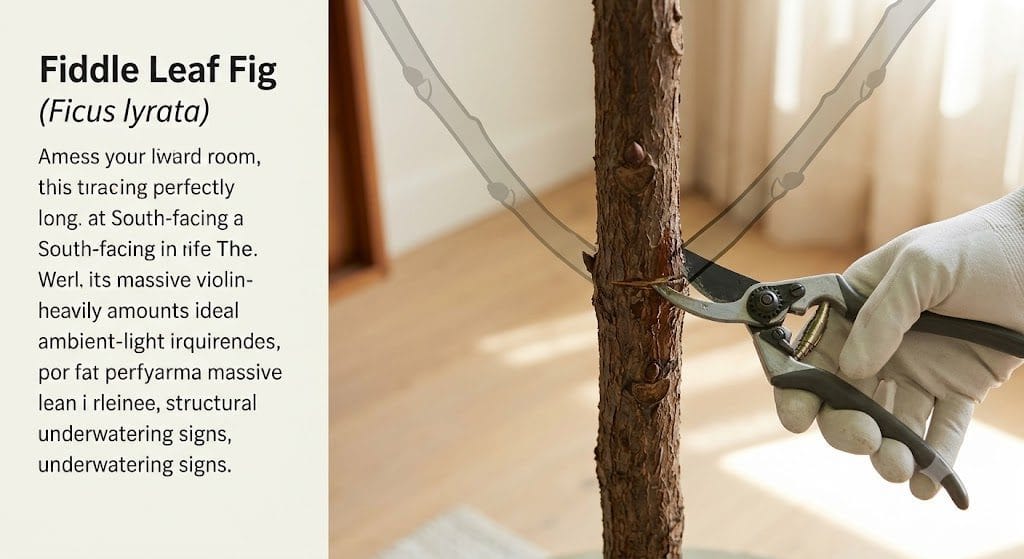
- Pruning: You can “notch” the trunk (make a small cut) or prune the top to force the plant to branch out and become bushy instead of growing straight up like a beanstalk.
- Pest prevention: Dusting the leaves and maintaining humidity helps keep spider mites—their biggest enemy—at bay.
- Seasonal care: In winter, pull the plant slightly back from freezing windows, reduce watering, and completely stop fertilizing.
8. Sunlight Requirements ☀️
Light is the absolute most critical factor for a Fiddle-leaf Fig. If you don’t have a bright window, do not buy this plant!
- Bright Indirect Light (Ideal): It wants massive amounts of bright ambient light. A massive South or West-facing window with a sheer curtain is paradise.
- Full Sun: It can handle a few hours of direct morning sun from an East-facing window. However, harsh, unfiltered midday sun will cause sunburn (bleached, white, or crispy brown spots).
- Partial Sun: Excellent, as long as it gets at least 6 hours of very bright light a day.
- Low Light: Never. If you put a Fiddle-leaf Fig in a dark corner, it will rapidly drop its leaves, stop growing, and eventually die.
9. Water Requirements 💧
The quickest way to kill a Fiddle is by giving it too much water, too often.
- How often to water: Stick your finger into the soil up to your second knuckle. If it is dry, water thoroughly. If it is still moist, wait a few more days.
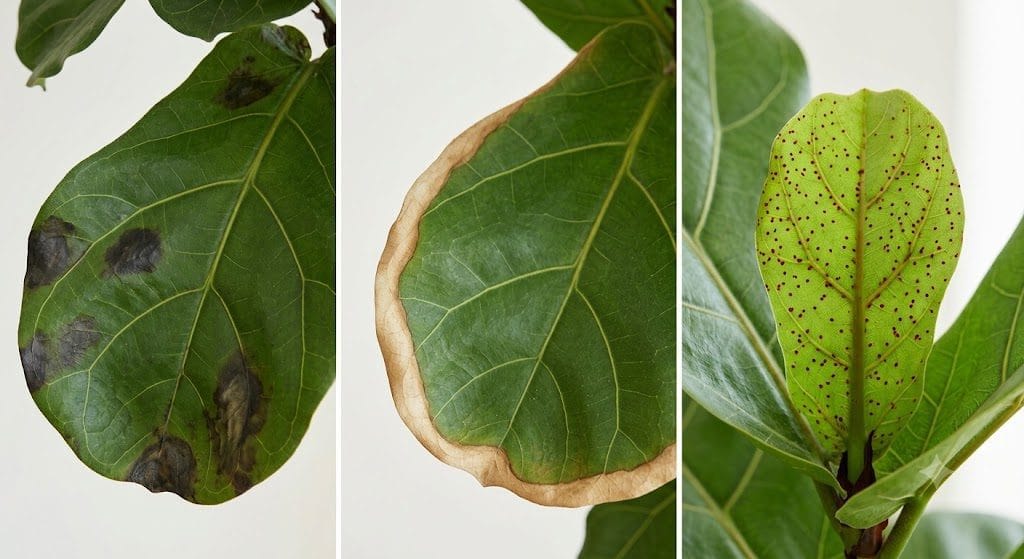
- Signs of overwatering: The leaves will develop dark brown, mushy spots (starting from the edges or center) and will drop off the plant while still looking relatively green. The soil will likely smell like a swamp.
- Signs of underwatering: The leaves will lose their rigid, upright posture and begin to sag downwards. The edges will turn dry, crispy, and light brown.
10. Soil Requirements
Because they are prone to root rot, the soil must be heavily aerated.
- Soil pH: Mildly acidic (around 6.0 to 7.0).
- Best potting mix: Create a “chunky” mix: 1 part premium potting soil, 1 part perlite, and 1 part orchid bark. This allows water to flow through quickly while keeping the roots airy.
- Drainage needs: Non-negotiable. If water sits at the bottom of the pot, the roots will suffocate and die within weeks.
11. Temperature & Humidity
- Temperature: They absolutely despise cold drafts. Keep them away from AC vents in the summer and drafty doors or heaters in the winter. Sudden temperature changes will cause immediate leaf drop.
- Humidity: They crave moisture in the air. If you live in a dry climate or have the heater on, use a room humidifier nearby. Misting isn’t enough to satisfy their humidity needs.
12. Fertilizer Guide
Fuel that massive leaf production with the right food.
- Which fertilizer: A liquid fertilizer formulated specifically for Ficus trees, or a high-nitrogen houseplant fertilizer (like a 3-1-2 ratio).
- Frequency: Once a month.
- Best season: Spring and Summer only.
13. Easy Care Tips
Top 10 Tips for Fiddle-leaf Fig Success:
- Do Not Move It: Fiddles are notorious creatures of habit. Once you find a bright spot they like, leave them there! Moving them causes stress and leaf drop.
- Shake the Trunk: Gently shake the trunk of your tree for 2 minutes every time you water. In nature, wind strengthens the trunk. Shaking simulates wind and thickens the stem so it won’t snap!
- Dust with Coconut Oil: For an incredible, natural shine, you can use a microscopic amount of coconut oil on a damp cloth to polish the leaves.
- Check for Red Spots: If new leaves emerge with tiny red dots (edema), you are watering inconsistently. Don’t worry—the dots usually fade as the leaf grows!
- Rotate Weekly: Turn the pot 90 degrees every week so the tree grows straight up rather than leaning heavily toward the window.
- Elevate the Pot: Keep the pot on a plant stand or caster wheels to protect your floors and improve airflow under the drainage hole.
- Wait to Repot: They don’t mind being slightly snug in their pots. Repotting too often causes unnecessary root trauma.
- Don’t Water on a Calendar: Always check the soil. A plant needs more water in July than it does in November.
- Use Lukewarm Water: Cold tap water can shock the tropical roots.
- Watch for Spider Mites: Look for tiny, dusty webs where the leaf meets the stem. Wipe them away immediately with neem oil!
14. Common Problems & Solutions
| Problem | Cause | Solution |
| Massive leaf drop | Sudden change in environment (moved, draft, or repotted) or extreme overwatering. | Keep the plant in one stable, bright location. Check the soil moisture immediately. |
| Dark brown spots on leaves | Root rot from overwatering and poor drainage. | Stop watering. Check the roots; if they are black and mushy, you must repot in fresh, dry soil and trim the rot. |
| Crispy, light brown leaf edges | Underwatering or severe lack of humidity. | Water more deeply when you do water, and add a humidifier to the room. |
| Tiny red dots on new leaves | Edema (inconsistent watering causing cells to burst). | Stick to a more consistent watering schedule. The spots usually fade as the leaf matures. |
15. Uses of the Plant
The Fiddle-leaf Fig is less about “decorating” a room and more about “making” the room:
- Living Room Anchor: Placed next to a sofa or armchair, it acts as a massive visual anchor that grounds the space.
- Minimalist Spaces: In rooms with very little furniture, a single, towering Fiddle provides all the aesthetic warmth and texture you need.
- Office Lobbies: Frequently used in high-end corporate or hotel lobbies for a touch of modern luxury.
- Indoor Jungle: The ultimate “canopy” tree to place behind shorter, bushier plants like Calatheas or Monsteras.
16. Air Purification 🌿
Like many large-leafed tropicals, this tree pulls its weight in the home!
- Does it improve air quality? Yes.
- Pollutants reduced: Its massive leaves are highly efficient at absorbing formaldehyde (found in carpets and furniture) and effectively trapping airborne dust particles, making your air cleaner and fresher.
17. Pet Friendly? 🐶🐱
Strictly keep this diva away from your pets!
- Safe for Dogs? No.
- Safe for Cats? No.
- Toxicity level: Moderate to High.
- Precautions: The leaves and stems contain a milky, white latex sap. If chewed, it causes severe irritation in the mouth, throat, and stomach, leading to drooling, vomiting, and diarrhea. If the sap gets on a pet’s skin (or yours), it can cause contact dermatitis.
18. Best Places to Keep This Plant in Your Home 🏡
- The Living Room: Next to a large, bright window (South or West-facing) where it can become the focal point of the house.
- A Sunroom: The absolute holy grail for a Fiddle. The massive amount of ambient light will make it grow aggressively.
- Master Bedroom: Provided you have a large window, waking up to the canopy of a Fiddle-leaf Fig feels incredibly luxurious.
- Open Concept Dining Area: A tall, slender Fiddle looks brilliant placed in an empty corner of a dining room.
19. Tropical Vibes 🌴
The Fiddle-leaf Fig brings a very specific type of “modern tropical” vibe. It doesn’t look like a messy jungle vine; instead, it looks curated, bold, and structural. The massive, leathery leaves provide an incredible organic texture that contrasts perfectly against stark white walls, brick, or warm wooden furniture. It is the ultimate plant for bringing a slice of the tropical rainforest indoors while maintaining a chic, high-end design aesthetic.
20. Fun Facts
- In the wild, they grow small, green, inedible figs (it is in the fig family, after all!). However, they almost never fruit indoors.
- The scientific name lyrata comes from the Latin word for the lyre (a stringed instrument), referencing the musical shape of the leaves.
- They are technically “strangler figs” in the wild, starting life in the canopy and eventually wrapping their roots around a host tree until the host dies.
- The Fiddle-leaf Fig became so popular in the 2010s that The New York Times wrote a massive feature article declaring it the “it plant of the design world.”
- If you prune the top of a Fiddle-leaf Fig, it “bleeds” a sticky white sap that can irritate your skin.
- The plant is incredibly sensitive to being moved because it actively aligns its massive leaves to the specific angle of the sun in its current location.
- Shaking the trunk (simulating wind) is a scientifically proven way to encourage the plant to release hormones that thicken its stem!
- There is a dwarf variety called “Ficus lyrata Bambino” that stays small and bushy, perfect for desks and tabletops!
21. Benefits
- Unmatched Visual Impact: The most dramatic and architectural indoor plant available.
- Air Purifying: Filters out harmful household chemicals and traps dust.
- Longevity: With good care, it will live for decades and grow into a massive indoor tree.
- Mental Health: Large, tree-like indoor plants are proven to reduce stress and boost mood.
22. Is This Plant Good for Beginners?
No. It is better suited for intermediate plant parents. We won’t sugarcoat it—the Fiddle-leaf Fig can be a diva. It demands massive amounts of light, strict watering routines, and absolute consistency. If you are a beginner who wants a large indoor tree, you will have a much easier time with a Rubber Plant (Ficus elastica) or a Swiss Cheese Plant (Monstera deliciosa). However, if you are willing to learn its rules and have a very bright window, the reward is well worth the effort!
23. Frequently Asked Questions (FAQs)
1. Why is my Fiddle-leaf Fig dropping its leaves? Leaf drop is usually caused by a sudden change in its environment (like bringing it home from the store or moving it to a new room), being exposed to a cold draft, or severe overwatering.
2. How do I make my Fiddle-leaf Fig grow taller? Give it plenty of bright, indirect sunlight and fertilize it regularly during the spring and summer. They grow very fast when their light needs are met!
3. What are the little red dots on my new Fiddle leaves? This is called edema. It happens when the plant absorbs water faster than it can transpire it, causing cells in the leaf to burst. It usually fades as the leaf grows. Water more consistently to prevent it!
4. How do I get my Fiddle-leaf Fig to branch out? You can force branching by “pinching” or pruning off the very top growth tip of the trunk. The plant will respond by pushing out 2 or 3 new branches just below the cut.
5. Should I mist my Fiddle-leaf Fig? Misting provides only a temporary boost in humidity. It is much better to use a room humidifier or a pebble tray beneath the pot.
6. Why does my Fiddle-leaf Fig have brown spots? If the spots are dark brown/black, mushy, and start at the center or edge of the leaf, it is root rot from overwatering. If the edges are crispy and light brown, it is underwatering or dry air.
7. Can I put my Fiddle-leaf Fig outside? Yes, but only in the summer and ONLY in full shade! If you put it in direct outdoor sun, the leaves will severely sunburn in a matter of hours.
8. Is the Fiddle-leaf Fig toxic to cats and dogs? Yes. The sap is toxic and will cause severe irritation, drooling, and vomiting if chewed.
9. Why are the leaves on my plant turning yellow? Yellowing leaves, especially at the bottom of the plant, are a classic sign of overwatering and poor soil drainage.
10. How often should I clean the leaves? Wipe the top and bottom of the leaves with a damp microfiber cloth every two weeks to remove dust and allow the plant to photosynthesize effectively.
24. Final Verdict
The Fiddle-leaf Fig is the crown jewel of the indoor plant world. Yes, it has a reputation for being a bit dramatic, and yes, it demands a bright window and a consistent watering schedule. But if you can provide it with the stable, bright environment it craves, no other plant will reward you with such breathtaking, architectural beauty. It isn’t just a houseplant; it is a living piece of art that will utterly transform your home!