
Master Money Plant care! Learn how to grow Golden Pothos in soil or water, fix yellow leaves, and use Feng Shui to attract prosperity and luck to your home.
If there is one plant that almost every single plant lover, grandparent, and college student has owned at some point in their lives, it is the legendary Money Plant. Have you ever wondered why this specific plant is found in millions of homes across the world, thriving in old glass bottles on windowsills and trailing down from dusty office shelves?https://plantroopan.com/product/money-plant-golden-with-pot/
The answer is simple: it is practically invincible, breathtakingly lush, and steeped in cultural beliefs of good fortune. Whether you are looking to attract wealth and prosperity or simply want a trailing vine that refuses to die no matter how much you neglect it, the Money Plant is the ultimate green companion. Let’s explore everything you need to know about growing and styling this iconic household staple!
2. Quick Overview
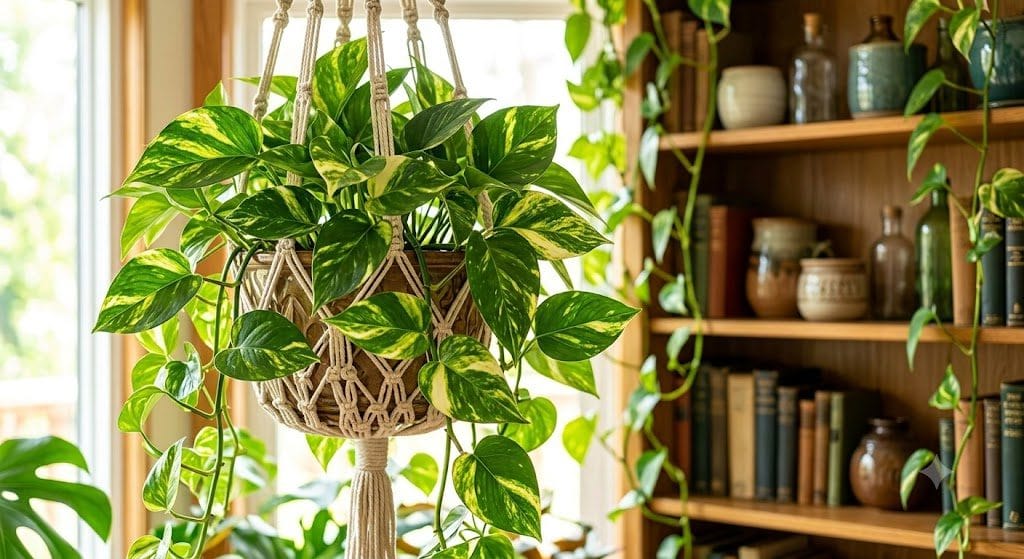
The Money Plant, most commonly known scientifically as Epipremnum aureum (and widely called Golden Pothos or Devil’s Ivy globally), is an incredibly hardy evergreen vine. Native to the Society Islands of French Polynesia, it has become naturalized in tropical and sub-tropical forests worldwide. Loved for its heart-shaped, glossy leaves that often feature stunning golden-yellow or white variegation, it is arguably the easiest houseplant in existence. It can grow in soil, it can grow in pure water, and it can survive in almost pitch-black rooms!
3. Plant Specifications
Here is a quick snapshot of what you need to know about the beloved Money Plant:
| Specification | Details |
| Botanical Name | Epipremnum aureum |
| Common Name | Money Plant, Golden Pothos, Devil’s Ivy, Hunter’s Robe |
| Family | Araceae (Aroid family) |
| Plant Type | Evergreen climbing/trailing vine |
| Origin | Mo’orea (French Polynesia) |
| Mature Height | Trails 6–10 feet indoors (climbs up to 60 feet outdoors!) |
| Mature Width | 1–3 feet (depending on the pot) |
| Growth Rate | Very Fast |
| Lifespan | 10+ years indoors (virtually immortal through propagation) |
| Toxicity | Toxic to cats, dogs, and humans if ingested |
| Difficulty Level | Extremely Easy (The ultimate beginner plant) |
4. Plant History
The Money Plant has a rich and vibrant cultural history, especially in Asia. According to Feng Shui and Vastu Shastra principles, this plant is believed to attract positive energy (Chi), prosperity, and financial luck to the household—hence the famous name “Money Plant.”
Botanically, it earned the fierce nickname “Devil’s Ivy” because it is almost impossible to kill and stays vibrantly green even when kept in the dark. In the wild tropical forests of Southeast Asia and Australia, it starts as a small vine on the forest floor before using its aerial roots to climb massive trees. As it climbs higher towards the sun, the leaves can grow to the size of a dinner plate, developing deep splits similar to a Monstera!
5. Why You’ll Love This Plant ❤️
There are so many reasons the Money Plant is a global favorite:
- The Ultimate Survivor: Forget to water it for three weeks? It will forgive you. Put it in a dark corner? It will adapt.
- Water or Soil: It is one of the rare plants that can live for years in just a simple glass vase filled with tap water.
- Super Fast Growth: It grows so quickly that you can literally watch it trail further down your bookshelf week by week.
- Symbol of Luck: It brings a beautiful sense of hope, positivity, and prosperity to your living space.
6. Growing Instructions
Growing a Money Plant is so easy it almost feels like cheating.
- Best climate: Warm and humid, but it adapts easily to dry, air-conditioned rooms.
- Pot selection: Any pot works! Just ensure it has drainage holes if you are planting it in soil.
- Soil mix: Standard potting soil. It isn’t picky, but adding a little perlite helps prevent waterlogging.
- Watering: Let the top 2 inches of soil dry out between waterings.
- Fertilizer: A standard liquid houseplant fertilizer once a month during spring and summer.
- Temperature: Keep it between 60°F to 85°F (15°C – 29°C).
- Humidity: It loves high humidity but survives perfectly fine in dry indoor air.
- Repotting: Repot every 1–2 years when the roots start circling the bottom of the pot.
- Growth speed: Incredibly fast during the warmer months.
7. Plant Care Guide
Routine care for a Money Plant is minimal, making it perfect for busy people.
- Watering schedule: Typically once a week in the summer, and once every two weeks in the winter.
- Fertilizer routine: Dilute your fertilizer to half-strength. They are very light feeders, so don’t overdo it!
- Cleaning leaves: Wipe the dust off the glossy leaves with a damp cloth occasionally.
- Pruning: Pruning is highly encouraged! Snipping the ends of the vines forces the plant to branch out at the top, making it bushier and fuller.
- Pest prevention: They are highly pest-resistant, though a weak, overwatered plant might attract fungus gnats or mealybugs.
- Seasonal care: Growth will slow down in winter. Reduce watering and stop fertilizing until spring.
8. Sunlight Requirements ☀️
The Money Plant is a master of adaptation when it comes to lighting.
- Bright Indirect Light (Ideal): This is where the plant thrives. The leaves will grow large, and the beautiful golden/white variegation will become very pronounced.
- Full Sun: Avoid harsh afternoon sun. Too much direct sunlight will scorch the leaves and turn them pale yellow or white.
- Partial Sun: A little gentle morning sun from an East-facing window is wonderful.
- Low Light: It handles low light better than almost any other plant. Just note that in dark rooms, the leaves will turn solid green (losing their variegation) to absorb as much light as possible.

9. Water Requirements 💧
This plant loves water but is incredibly forgiving if you forget.
- How often to water: Wait until the top half of the soil feels dry. When it needs water, the leaves will lose their stiffness and begin to droop slightly.
- Signs of overwatering: If the leaves are turning a sickly, mushy yellow and dropping off rapidly, the soil is too wet and the roots are rotting.
- Signs of underwatering: The entire plant will droop dramatically, and the leaf edges will become brown and crispy. Give it a good soak, and it will perk right back up!
10. Soil Requirements
You do not need fancy, expensive soil for this plant.
- Soil pH: Mildly acidic to neutral (6.1 to 7.5).
- Best potting mix: Regular, high-quality indoor potting soil works perfectly. If you want to spoil it, mix in a handful of perlite or coco coir to improve aeration.
- Drainage needs: If growing in soil, drainage is important. However, you can also grow cuttings completely in a vase of water (just change the water every week!).
11. Temperature & Humidity
- Temperature: Keep it cozy above 60°F (15°C). It will suffer if exposed to freezing drafts from winter windows.
- Humidity: Normal room humidity is perfectly fine. If you live in a very dry climate, occasional misting or a pebble tray will help it grow slightly faster, but it is not strictly necessary.
12. Fertilizer Guide
- Which fertilizer: Any balanced, all-purpose liquid houseplant fertilizer.
- Frequency: Once a month.
- Best season: Only during the active growing season (Spring and Summer).
13. Easy Care Tips
Top 10 Tips for Money Plant Success:
- Grow it in Water: Cut a piece of the vine (make sure it has a little brown root node) and stick it in a glass bottle with tap water. It will live there for years!
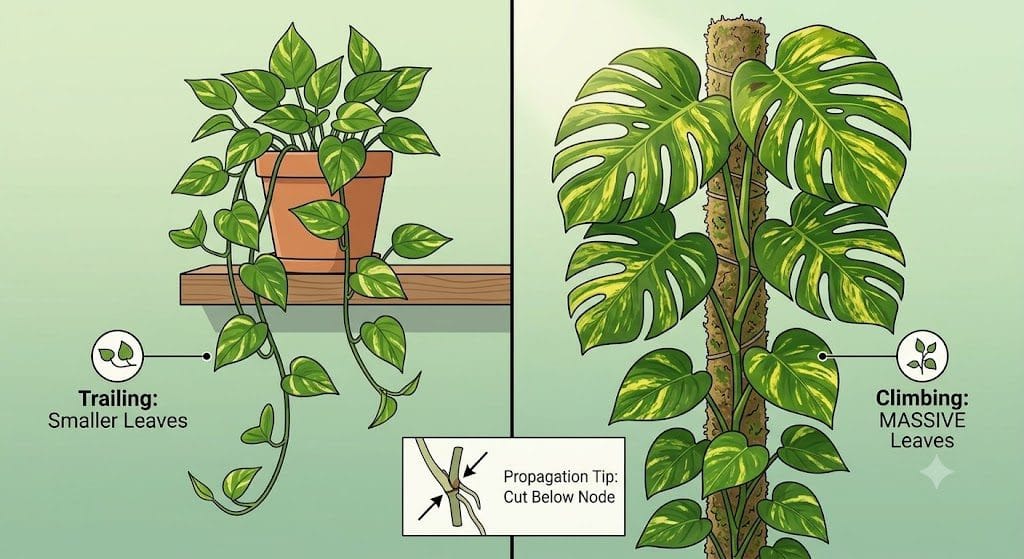
- Give it a Pole: If you want MASSIVE leaves, give the plant a moss pole to climb. Plants that climb up produce larger leaves; plants that trail down produce smaller leaves.
- Chop and Prop: Whenever a vine gets too long, cut it off and stick it back into the top of the soil to make the pot look fuller.
- More Light = More Color: If your golden pothos is turning completely green, it just needs a brighter spot to bring back the yellow splashes!
- Let it Droop: Unsure if you should water? Wait for the plant to wilt just a tiny bit before watering.
- Clean the Glass: If growing in water, wash the vase occasionally to prevent algae buildup.
- Rotate the Pot: Give it a quarter turn every few weeks so all sides get equal sunlight.
- Don’t Over-Fertilize: Too much fertilizer will burn the roots and cause brown spots on the leaves.
- Pin it Up: Use clear command hooks to train the vines to grow across your walls or around your window frames!
- Keep it Warm: Avoid placing it directly under an icy AC vent.
14. Common Problems & Solutions
| Problem | Cause | Solution |
| Yellowing leaves all over | Overwatering / soggy soil. | Let the soil dry out completely. Ensure the pot has drainage holes. |
| Stems are leggy (lots of stem, few leaves) | Not enough light. | Move the plant closer to a window, and prune the leggy vines to encourage new growth. |
| Brown, crispy leaf edges | Underwatering or very dry air. | Water more consistently. If the soil is repelling water, soak the whole pot in a bowl of water for 30 mins. |
| Loss of variegation (turning solid green) | Low light conditions. | Move to a brighter location with indirect sunlight. |
15. Uses of the Plant
The Money Plant is the ultimate styling chameleon:
- Trailing Decor: Looks stunning cascading off high bookshelves, kitchen cabinets, or mantles.
- Vertical Climbing: Train it up a moss pole or trellis to create a towering, leafy pillar.
- Water Propagation: Looks incredibly chic growing in antique glass bottles or test-tube propagation stations on a windowsill.
- Office Desks: Thrives under harsh fluorescent office lights with minimal care.
- Spiritual Use: Placed in the southeast corner of a room, it is widely believed in Vastu and Feng Shui to attract wealth and prosperity.
16. Air Purification 🌿
If you want an affordable, natural air filter, this is it.
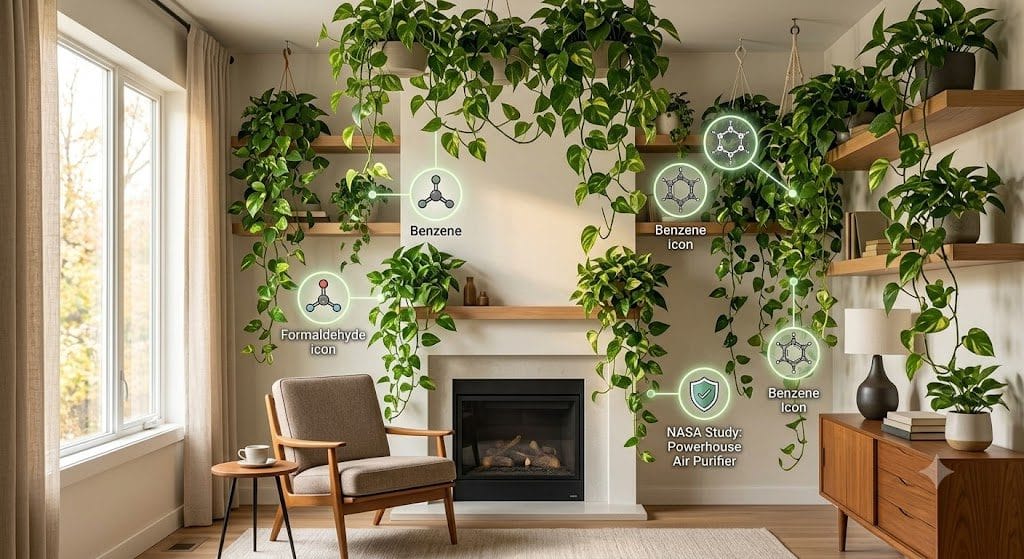
- Does it improve air quality? Yes! It was heavily featured in the NASA Clean Air Study.
- Pollutants reduced: The Money Plant is a powerhouse at filtering out toxic VOCs (Volatile Organic Compounds) such as formaldehyde, benzene, xylene, and toluene, which are often found in synthetic carpets, paints, and cleaning products.
17. Pet Friendly? 🐶🐱
Keep those trailing vines out of reach!
- Safe for Dogs? No.
- Safe for Cats? No.
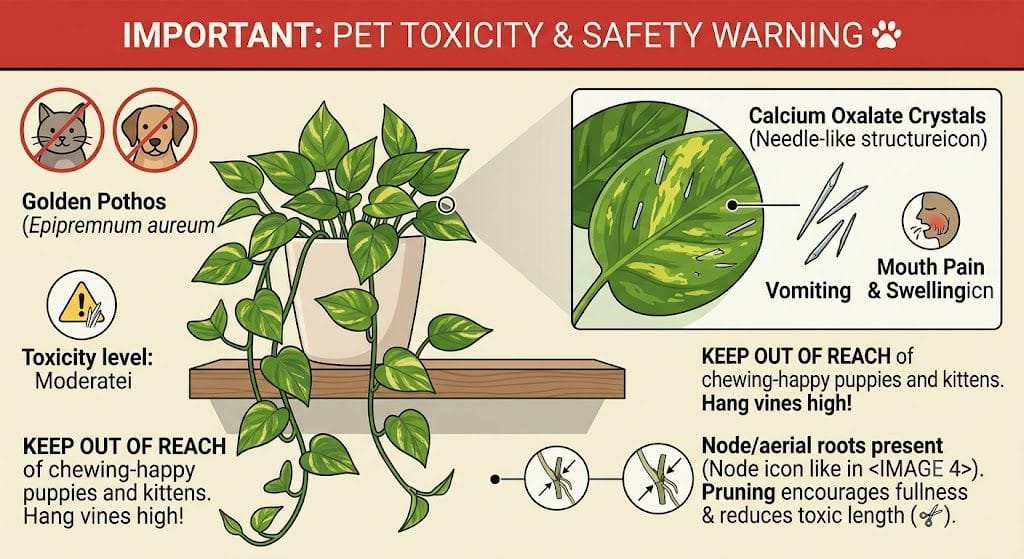
- Toxicity level: Moderate.
- Precautions: The plant contains insoluble calcium oxalate crystals. If chewed by a pet, these crystals act like microscopic needles, causing severe burning and swelling of the lips, tongue, and throat, along with vomiting. Because it trails, it is very tempting for playful cats, so hang it high!
18. Best Places to Keep This Plant in Your Home 🏡
- The Bedroom: Excellent for filtering the air while you sleep. Keep it on a high shelf so the vines can drape elegantly.
- The Bathroom: The extra humidity from the shower will make this plant grow incredibly fast.
- The Living Room (Southeast Corner): According to Vastu Shastra, placing a Money Plant in the southeast corner of your living room invites financial luck and positive energy.
- Kitchen Window: A perfect spot for growing cuttings in glass jars filled with water.
19. Tropical Vibes 🌴
The Money Plant brings a relaxed, effortless “urban jungle” aesthetic to any space. Because it grows so quickly and can be trained to climb walls or drape across ceilings, it makes a room feel completely surrounded by nature. It softens the hard, architectural lines of modern homes, bringing a lively, wild, and organic energy that feels like a cozy tropical treehouse.
20. Fun Facts
- It is called “Devil’s Ivy” because it is nearly impossible to kill and can stay green even in total darkness for long periods.
- In the wild, when the plant climbs high enough into the forest canopy, its leaves can grow over 3 feet long and develop massive splits (fenestrations).
- It is incredibly rare for a Money Plant to flower in captivity. The last known spontaneous flowering of an indoor Epipremnum aureum was in 1964!
- You can take a single leaf with a tiny node, put it in water, and it will grow into an entirely new 10-foot plant.
- According to Feng Shui, the five leaves on a single branch represent the five elements: wood, water, fire, metal, and earth.
- It is one of the most widely naturalized invasive plant species in tropical regions worldwide, simply because it grows so aggressively!
- It has aerial roots that naturally grip onto tree bark (or your living room walls) like tiny suction cups.
- While we call it a “Money Plant” in Asia, in the West, it is almost exclusively referred to as a “Pothos”.
21. Benefits
- Indestructible: The perfect plant for people who claim they have a “black thumb.”
- Air Purifying: Filters out harsh chemicals from indoor environments.
- Highly Versatile: Can grow in soil or water, and can climb or trail.
- Easy Propagation: A single plant can give you a lifetime supply of free gifts for friends and family.
- Cultural Positivity: Brings cultural symbolism of wealth, luck, and good fortune into the home.
22. Is This Plant Good for Beginners?
It is the BEST plant for beginners. If you have never owned a plant in your life, start with a Money Plant. It is deeply forgiving of mistakes. If you forget to water it, it will just droop to remind you. If you put it in the wrong light, it will just adapt. It gives you all the lush beauty of an indoor jungle with zero stress.
23. Frequently Asked Questions (FAQs)
1. Can a Money Plant really grow in just water? Yes! You can cut a vine just below a node (the little brown bump on the stem) and place it in water. It will grow water roots and can live there indefinitely. Just change the water every 7–10 days.
2. Why is my Money Plant turning yellow? If multiple leaves are turning mushy and yellow, you are overwatering it, or the pot doesn’t have drainage holes.
3. Does the Money Plant actually bring money? While it won’t spontaneously sprout dollar bills, it is deeply rooted in Feng Shui and Vastu Shastra traditions as a symbol of positive energy, growth, and prosperity.
4. How do I make my Money Plant bushy? Prune it! Cut the long vines off and propagate them. Pruning forces the plant to push out new growth from the top, making the pot look much fuller.
5. Why are the leaves on my plant getting smaller? When a Money Plant trails downward, the leaves naturally grow smaller. If you want massive leaves, you need to train the plant to climb upwards on a moss pole.
6. Can I keep my Money Plant in a windowless bathroom? It will survive for a surprisingly long time, but eventually, all plants need some light to photosynthesize. Try to leave the door open or use a grow light.
7. Is the Money Plant toxic to dogs and cats? Yes. The leaves contain calcium oxalate crystals which cause severe mouth pain, swelling, and vomiting if ingested by pets.
8. Why did my Golden Pothos lose its yellow stripes? It needs more light! In low light, the plant produces more green chlorophyll to survive, overriding the golden variegation. Move it to a brighter spot.
9. Can I plant water-propagated roots into soil? Yes, but do it carefully. Water roots are fragile. Keep the soil very moist for the first two weeks while the plant transitions to “soil roots.”
10. How fast does a Money Plant grow? In warm weather with bright, indirect light, a Money Plant can easily grow 12 to 18 inches of new vine in a single month!
24. Final Verdict
The Money Plant is an absolute legend in the houseplant community for a reason. It is universally loved because it asks for almost nothing but gives so much in return. Whether you are seeking a lush trailing aesthetic, a natural air purifier, or a cultural symbol of prosperity and luck, the Money Plant delivers flawlessly. Grab a cutting, pop it in a jar of water or a pot of soil, and watch the magic happen!