
Master Boston Fern care with our complete guide! Learn the secrets to perfect watering, fixing crispy brown leaves, and keeping this pet-friendly fern lush and healthy.
Picture this: A quiet, breezy afternoon, a comfortable chair, and the lush, cascading green fronds of a massive fern swaying gently in the background. If there is one plant that instantly brings a sense of timeless elegance, nostalgia, and sheer botanical volume to a space, it is the classic Boston Fern.
Whether hanging gracefully from a shaded balcony or sitting proudly on a pedestal in a bright bathroom, the Boston Fern is the undisputed king of indoor greenery. But beware—this beauty has a reputation for being a bit of a diva! Don’t worry, though; once you understand its native tropical cravings, keeping it lush and full is a breeze. Let’s unlock the secrets to mastering Boston Fern care!https://plantroopan.com/product/boston-fern-nephrolepis-exaltata-green-fern-plant-in-5-inch-pot/

2. Quick Overview
The Boston Fern, scientifically known as Nephrolepis exaltata, is a lush, evergreen perennial famous for its arching, feathery fronds. It gained massive popularity during the Victorian era and has remained a staple in home decor ever since. Loved for its dramatic volume and incredible air-purifying qualities, it is the perfect plant to create an indoor jungle vibe, provided you can give it the one thing it craves above all else: moisture.
3. Plant Specifications
Here is a quick snapshot of what you need to know before bringing a Boston Fern into your home:
| Specification | Details |
| Botanical Name | Nephrolepis exaltata |
| Common Name | Boston Fern, Sword Fern |
| Family | Nephrolepidaceae (or Lomariopsidaceae) |
| Plant Type | Evergreen fern |
| Origin | Tropical regions of the Americas, Africa, and Polynesia |
| Mature Height | 2–3 feet indoors |
| Mature Width | 2–3 feet |
| Growth Rate | Moderate to Fast (in ideal humidity) |
| Lifespan | 5 to 15+ years with excellent care |
| Toxicity | 100% Non-toxic to cats and dogs |
| Difficulty Level | Moderate (Requires consistent watering and humidity) |
4. Plant History
The story of the Boston Fern is actually a tale of a lucky genetic mutation! The original wild plant, the Sword Fern, has stiff, upright leaves. However, in 1894, a shipment of Sword Ferns was sent from Philadelphia to a florist in Boston. During the journey, one of the plants naturally mutated, developing the soft, gracefully arching, and drooping fronds we know today.
Botanists quickly recognized this beautiful anomaly, propagated it, and named it Nephrolepis exaltata ‘Bostoniensis’—the Boston Fern. It sparked a massive trend, fitting perfectly into the “Pteridomania” (Fern Fever) that swept through Victorian parlors.
5. Why You’ll Love This Plant ❤️
There are so many reasons to make space for a Boston Fern in your home:
- The Ultimate Statement Piece: A mature Boston Fern offers incredible volume and instantly fills empty vertical space.
- Pet-Friendly Perfection: It is completely non-toxic, so you never have to worry about curious cats or dogs.
- Breathtaking Air Purifier: It is one of the best plants in the world for naturally adding humidity to a room and filtering out toxins.
- Timeless Elegance: It never goes out of style, blending seamlessly with vintage, modern, and bohemian decor.
6. Growing Instructions
Setting your Boston Fern up for success means recreating a damp, shaded forest floor.
- Best climate: Warm, humid, and sheltered from harsh winds. During dry, scorching summers (like the intense loo winds in northern India), they might struggle if left outdoors. However, once the monsoon rolls in, they absolutely thrive in the warm, humid air!
- Pot selection: Plastic or glazed ceramic pots are actually better than terracotta for this plant, as they trap moisture in the soil.
- Soil mix: A rich, peaty, moisture-retaining potting soil that still drains well.
- Watering: Keep the soil consistently moist. Never let it dry out completely.
- Fertilizer: Feed with a diluted, balanced liquid fertilizer during the spring and summer.
- Temperature: Keep it cozy between 65°F to 75°F (18°C – 24°C).
- Humidity: Extremely high humidity is the secret to a happy fern.
- Repotting: Repot every 1–2 years in the spring when the roots have filled the pot.
- Growth speed: Fast, especially when kept warm and humid.
7. Plant Care Guide
Routine care for a Boston Fern requires a bit more attention than your average succulent.
- Watering schedule: Check the soil every 2–3 days. If the surface feels just barely dry, it is time to water.
- Fertilizer routine: Dilute your liquid fertilizer to half-strength and apply it once a month from spring through early autumn.
- Cleaning leaves: Because the fronds are delicate, dusting them is hard. Instead, take the whole plant to the shower once a month and gently rinse the foliage with lukewarm water.
- Pruning: It is completely normal for older fronds underneath the canopy to turn brown and die. Snip them off at the soil line to keep the plant looking fresh and direct energy to new growth.
- Pest prevention: Keep the humidity high to naturally deter spider mites, which love dry ferns.
- Seasonal care: Protect the plant from cold drafts and heating vents during winter. You may need to water slightly less, but humidity must remain high.
8. Sunlight Requirements ☀️
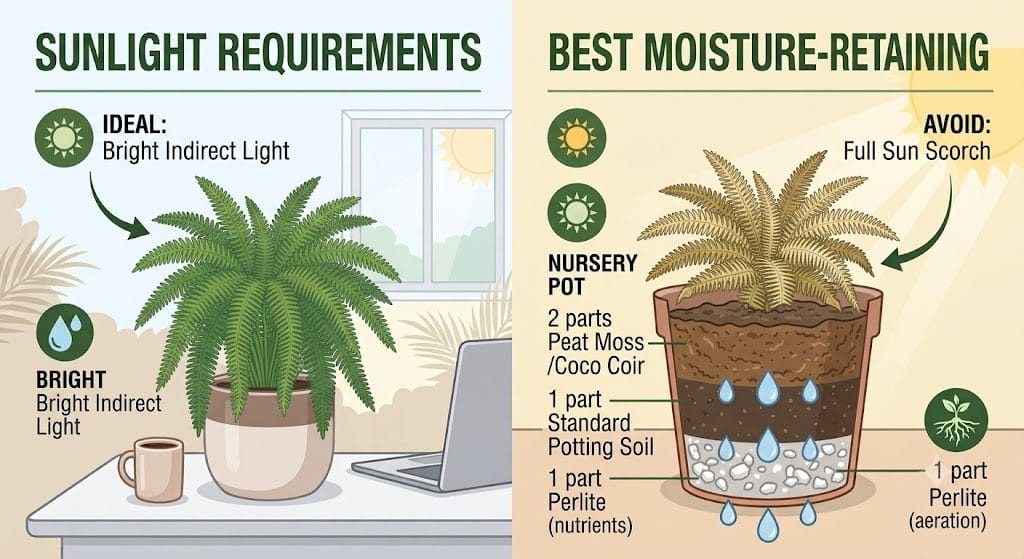
Boston Ferns evolved under the thick canopy of tropical trees, meaning they despise harsh, direct light.
- Bright Indirect Light (Ideal): Place it near a North or East-facing window where it gets gentle morning light and shade for the rest of the day.
- Full Sun: Absolutely avoid this! Direct sunlight will instantly scorch the fronds, turning them crispy, brown, and bleached.
- Partial Sun: Only acceptable if it is very early morning sun.
- Low Light: While they tolerate lower light better than many plants, they will drop leaves and look sparse if they are kept in a very dark corner.
9. Water Requirements 💧
Water is the lifeblood of the Boston Fern.
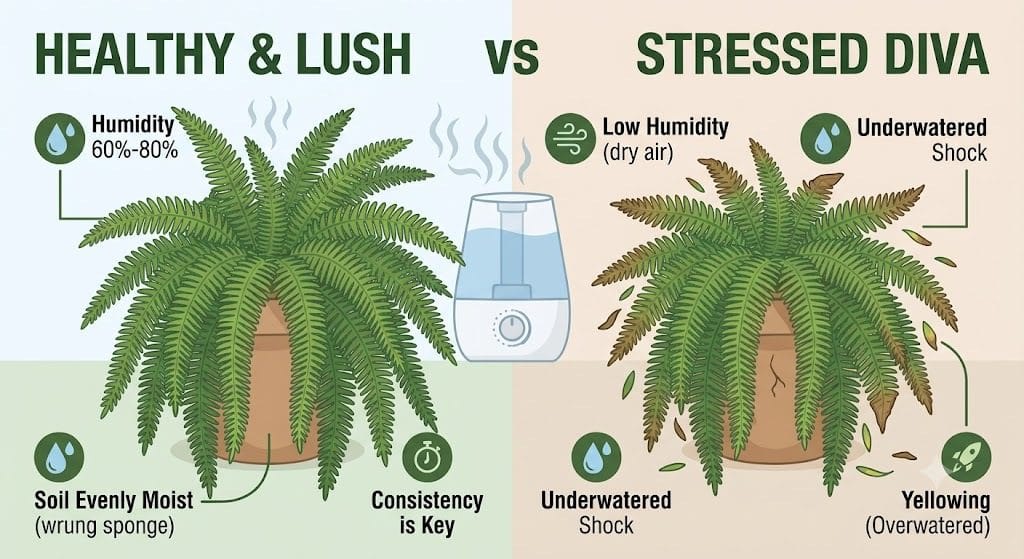
- How often to water: Keep the soil evenly moist like a wrung-out sponge. Water as soon as the top half-inch of soil feels dry.
- Signs of overwatering: If the fronds are turning yellow, dropping rapidly, and the soil smells swampy, you are overwatering. Ensure the pot has drainage holes so the roots aren’t sitting in mud.
- Signs of underwatering: This is the most common issue. The leaves will turn pale, crispy, and brown at the tips, and the plant will shed leaflets aggressively all over your floor.
10. Soil Requirements
The right soil makes watering much easier.
- Soil pH: Mildly acidic (around 5.0 to 5.5) is perfect.
- Best potting mix: Create a blend of 2 parts peat moss (or coco coir for a sustainable option), 1 part standard potting soil, and 1 part perlite.
- Drainage needs: The soil must hold moisture but drain excess water quickly so the roots can breathe.
11. Temperature & Humidity
This is where most people fail with Boston Ferns—they underestimate the humidity requirement!
- Temperature: Keep it away from extremes. AC vents, radiators, and drafty doors will cause the plant to stress and drop its leaves.
- Humidity: They demand high humidity (60% to 80%). Regular indoor humidity is usually too low. You must supplement this by using a humidifier, keeping it in a bright bathroom, or using a large pebble tray filled with water beneath the pot.
12. Fertilizer Guide
Ferns are sensitive to heavy salts in fertilizers, so gentle feeding is key.
- Which fertilizer: A balanced liquid houseplant fertilizer.
- Frequency: Once a month.
- Best season: Only during the active growing season (Spring and Summer).
13. Easy Care Tips
Top 10 Tips for Boston Fern Success:
- The Shower Trick: Take your fern into the bathroom when you take a hot shower. It will love the steam!
- Double Potting: Place your fern in a plastic pot, and put that inside a slightly larger decorative pot lined with damp sphagnum moss to boost local humidity.
- Avoid Terracotta: Clay pots wick moisture away from the soil too fast for a fern.
- Don’t Touch the Fronds: Ferns hate being bumped or brushed against constantly; it causes the tips to brown.
- Expect Some Shedding: It is perfectly normal for a fern to drop a few leaves when adjusting to a new home.
- Use Room Temperature Water: Cold water can shock the tropical roots.
- Soak the Bottom: If the soil gets too dry, it might repel water. Let the pot sit in a bowl of water for 30 minutes to rehydrate the peat moss from the bottom up.
- Mist Wisely: Misting helps slightly, but a humidifier is far more effective.
- Trim the Dead Stuff: Regularly cutting out the dead, brown undergrowth improves airflow and prevents fungal issues.
- Keep it out of the Wind: A strong breeze (from a fan or an open window) strips moisture from the delicate leaves instantly.
14. Common Problems & Solutions
| Problem | Cause | Solution |
| Crispy, brown leaf tips | Air is too dry (low humidity) or underwatering. | Install a humidifier, use a pebble tray, and ensure the soil never dries out completely. |
| Massive leaf shedding | Severe underwatering or a sudden change in environment (shock). | Give the plant a deep soak. Keep it in one consistent location so it can acclimate. |
| Yellowing leaves | Overwatering or poor soil drainage. | Allow the top inch of soil to dry before watering again. Ensure the pot has drainage holes. |
| Pale, washed-out green leaves | Too much direct sunlight or lack of nutrients. | Move away from direct sun. Apply a half-strength liquid fertilizer. |
15. Uses of the Plant
The Boston Fern is a versatile styling tool for both indoors and outdoors:
- Hanging Baskets: The absolute best way to display a fern, allowing the fronds a full 360-degree cascade.
- Pedestal Planters: Elevating the pot on a plant stand mimics its natural height and gives the fronds room to drape.
- Bathroom Decor: The perfect environment for a fern, turning your bathroom into a spa-like retreat.
- Shaded Balconies: Excellent for outdoor summer decor on a covered porch, provided it is protected from harsh afternoon sun and hot, dry winds.
16. Air Purification 🌿
If you want clean air, this is your champion.
- Does it improve air quality? Yes! It is one of the top-rated plants in the famous NASA Clean Air Study.
- Pollutants reduced: The Boston Fern is particularly exceptional at removing formaldehyde (found in carpets, glues, and paints), xylene, and toluene from indoor air. It also acts as a highly effective natural humidifier.
17. Pet Friendly? 🐶🐱
Great news for pet owners!
- Safe for Dogs? Yes.
- Safe for Cats? Yes.
- Toxicity level: 100% Non-toxic.
- Precautions: While completely safe, the long, dangling fronds are incredibly tempting for cats to play with. Swiping at the plant will damage the delicate leaves, so you may still want to hang it out of reach to protect the plant from the pet!

18. Best Places to Keep This Plant in Your Home 🏡
- The Bathroom: If you have a frosted window, the high humidity from your daily showers makes this the ultimate fern paradise.
- The Kitchen: Often more humid than the rest of the house, a spot near an East-facing kitchen sink is ideal.
- Living Room Corners: Placed on a tall stand away from heating/cooling vents, it fills empty corners beautifully.
- Covered Porches: Perfect for creating that classic, welcoming “Southern porch” aesthetic during warm, humid months.
19. Tropical Vibes 🌴
Nothing says “lush jungle” quite like a massive fern. The Boston Fern brings an immediate sense of dense, verdant life to a room. Its finely textured foliage contrasts beautifully against the broad, flat leaves of plants like Monsteras or Birds of Paradise. Because it grows outwards and downwards, it visually softens the hard architectural lines of bookshelves, windowsills, and stark white walls, making the entire room feel softer, cooler, and more organic.
20. Fun Facts
- Ferns do not grow from seeds! They reproduce via microscopic spores found in small brown dots (called sori) on the undersides of their leaves.
- The Boston Fern is technically a mutant variety of the wild Sword Fern.
- Ferns are some of the oldest plants on Earth, predating dinosaurs by millions of years!
- The brown, furry “roots” you see growing on the soil surface are actually rhizomes, which help the plant spread and absorb moisture from the air.
- In the Victorian era, “fern hunting” became a massive craze among the upper class, leading to the creation of elaborate glass Wardian cases (the first terrariums) just to keep them alive indoors.
- A single healthy Boston fern can add a significant amount of moisture to a dry room through transpiration.
- They are naturally epiphytic or epilithic in the wild, meaning they often grow on trees or in rock crevices rather than in deep soil.
- If your fern completely dies back due to drought, don’t throw it away! Cut it down to the soil, water it, and the underground rhizomes will often push out entirely new growth.
21. Benefits
- Unmatched Air Purification: Highly effective at removing formaldehyde.
- Natural Humidifier: Adds healthy moisture to dry indoor air.
- Pet Safe: Zero risk to cats and dogs.
- Aesthetic Volume: Fills large spaces with lush greenery quickly.
- Stress Reduction: The dense, soft foliage has a calming, psychological effect on indoor spaces.
22. Is This Plant Good for Beginners?
Yes and No. It requires a specific routine. The Boston Fern is not a “set it and forget it” plant like a Snake Plant or Pothos. If you are someone who frequently forgets to water your plants or lives in a very dry climate with no desire to use a humidifier, this plant will cause you frustration. However, if you are a “helicopter plant parent” who loves checking on your plants daily, watering them, and fussing over them, the Boston Fern is absolutely perfect for you!
23. Frequently Asked Questions (FAQs)
1. Why is my Boston Fern dropping so many leaves? Leaf drop is usually a sign of underwatering, shockingly low humidity, or a sudden change in environment (like bringing it indoors for the winter).
2. What are the brown dots on the back of my fern’s leaves? Don’t panic—those aren’t bugs! They are spores, which are the natural way ferns reproduce.
3. How often should I water my Boston Fern? Whenever the top surface of the soil feels barely dry to the touch. This could be every 2 to 3 days depending on the temperature and pot size.
4. Should I mist my Boston Fern? Misting provides a temporary boost in humidity, but a room humidifier or a pebble tray is much more effective for long-term health.
5. Can a crispy, brown Boston Fern be saved? Yes! If the fronds are completely dead, cut the entire plant down to about 2 inches above the soil. Keep the soil moist, and it will likely sprout brand-new fronds from the roots.
6. Does the Boston Fern need direct sunlight? No, direct sunlight will scorch the leaves. It needs bright, indirect light to thrive.
7. Why are the tips of my fern turning brown? Brown tips indicate the air is too dry, the plant was bumped/touched too much, or the water you are using has high levels of salts and chemicals.
8. Is the Boston Fern safe for cats? Yes, the Boston Fern is completely non-toxic and safe for all pets.
9. Do Boston Ferns like small pots? Yes, they actually prefer to be slightly rootbound. Only repot when the roots are tightly packed and water runs straight through without absorbing.
10. What is the best soil for a Boston Fern? A rich, moisture-retaining soil with a peat moss or coco coir base, mixed with a little perlite for drainage.
24. Final Verdict
The Boston Fern is a classic for a reason. While it may demand a bit more attention to its watering schedule and humidity needs, the reward is well worth the effort. It offers spectacular, cascading beauty, unmatched air-purifying qualities, and complete peace of mind for pet owners. If you can provide a cozy, humid environment, this fern will transform your space into a lush, green sanctuary for years to come.