
Master Syngonium care with our ultimate guide! Learn how to water, prune, and grow a lush Arrowhead Plant. Perfect tips for pink and variegated varieties!
If there is one plant that perfectly captures the magic of a growing, living indoor jungle, it is the Syngonium. Have you ever watched a plant completely transform its appearance as it grows up? With its soft, pastel-toned leaves that actually change shape as the plant matures, the Syngonium is a delightful shape-shifter that keeps plant lovers constantly amazed.
Whether you want a cute, bushy tabletop plant in a chic ceramic pot, or a lush, trailing vine cascading beautifully from a hanging basket, this versatile beauty does it all. Let’s dive into everything you need to know about growing and caring for the enchanting Arrowhead Plant!https://plantroopan.com/product/arrowhead-elegance-the-syngonium-collection-pack-of-4/

2. Quick Overview
The Syngonium, widely known as the Arrowhead Plant or Arrowhead Vine, is an incredibly popular tropical houseplant. Native to the lush rainforests of Central and South America, it is adored for its spectacular foliage, which comes in stunning shades of green, creamy white, and even soft, dusty pinks. It is remarkably fast-growing, highly adaptable to indoor environments, and fantastic at purifying the air.
3. Plant Specifications
Here is a quick snapshot of what you need to know before bringing a Syngonium into your
| Specification | Details |
| Botanical Name | Syngonium podophyllum |
| Common Name | Arrowhead Plant, Arrowhead Vine, Goosefoot Plant |
| Family | Araceae (Aroid family) |
| Plant Type | Evergreen climbing vine / Perennial |
| Origin | Tropical rainforests of Central and South America |
| Mature Height | 1–3 feet indoors (as a bush); trails up to 6+ feet as a vine |
| Mature Width | 1–2 feet |
| Growth Rate | Fast (especially in spring and summer) |
| Lifespan | 5 to 10+ years indoors with good care |
| Toxicity | Toxic to cats, dogs, and humans if ingested |
| Difficulty Level | Easy (Great for beginners!) |
4. Plant History
The Syngonium originates beneath the dense canopy of Latin American rainforests, stretching from Mexico down to Brazil. In its natural habitat, it starts as a small plant on the forest floor, using its aerial roots to climb massive tree trunks in search of sunlight.
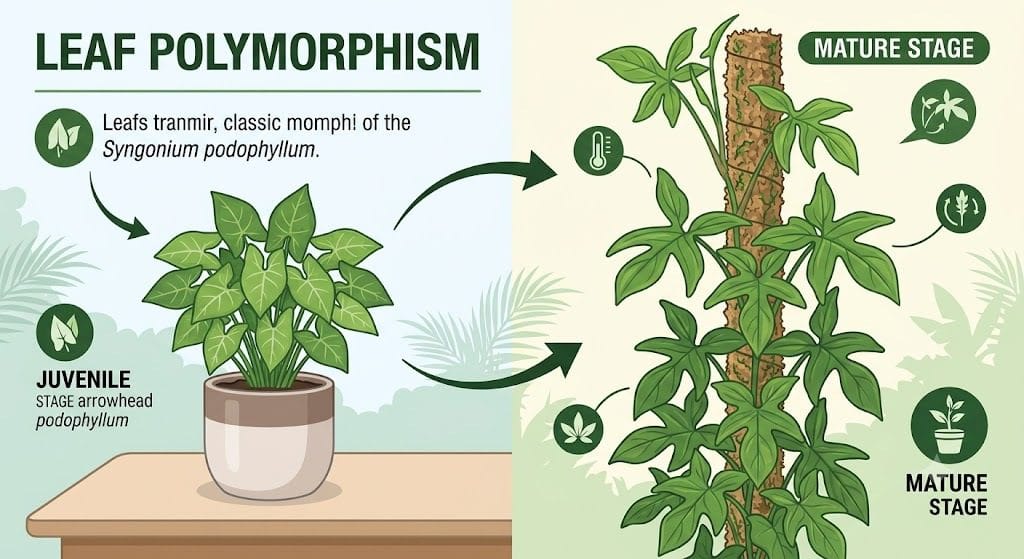
Botanists have long been fascinated by this plant because of a phenomenon called leaf polymorphism. This means the plant’s leaves drastically change shape throughout its life cycle. Young plants produce the classic, spade-like “arrowhead” leaves. However, as the plant matures and climbs, the leaves morph into complex, multi-lobed shapes that look entirely different!
5. Why You’ll Love This Plant ❤️
There are countless reasons to add a Syngonium to your indoor jungle:
- Incredible Colors: From the soft blush of the ‘Neon Robusta’ to the striking variegation of the ‘Albo’, there is a color palette for every aesthetic.
- Two Plants in One: You can prune it to keep it as a compact, bushy desk plant, or let it grow wild as a stunning, trailing vine.
- Fast and Forgiving: It grows vigorously during warm months and recovers quickly if you accidentally miss a watering.
- Highly Propagatable: It is incredibly easy to take cuttings and grow new plants to share with friends.
6. Growing Instructions
Setting your Arrowhead Plant up for success is easy when you mimic its natural rainforest home.
- Best climate: Warm and humid. It absolutely loves the heat and moisture of a typical tropical or monsoon climate.
- Pot selection: Any pot with excellent drainage holes. Plastic nursery pots dropped into decorative ceramic planters work perfectly.
- Soil mix: A light, airy, and well-draining aroid mix (potting soil mixed with plenty of perlite and orchid bark).
- Watering: Keep the soil slightly moist but never soggy. Let the top inch or two dry out between waterings.
- Fertilizer: Feed with a balanced, liquid houseplant fertilizer during the growing season.
- Temperature: Ideal temperatures range between 65°F to 80°F (18°C – 27°C).
- Humidity: It thrives in moderate to high humidity (50% or more).
- Repotting: Repot every 1–2 years when roots begin poking out the bottom drainage holes.
- Growth speed: Very fast during the spring and summer; slows down in cooler winter months.
7. Plant Care Guide
Routine care for a Syngonium is straightforward and rewarding.
- Watering schedule: Typically once a week, but adjust based on the temperature. Always test the soil with your finger first.
- Fertilizer routine: Dilute your liquid fertilizer to half-strength and apply once a month from spring through early autumn. Skip feeding in the winter.
- Cleaning leaves: Wipe the wide leaves with a damp, soft cloth every few weeks to remove dust and help the plant breathe.
- Pruning: Pruning is key! If you want a bushy plant, pinch off the climbing stems (runners). If you want a vine, let them grow!
- Pest prevention: Keep the humidity high to naturally deter spider mites. Inspect the undersides of leaves occasionally for mealybugs.
- Seasonal care: Protect the plant from cold drafts during winter. Growth will stall, so reduce watering frequency significantly.

8. Sunlight Requirements ☀️
Lighting dictates how vibrant your Syngonium will look.
- Bright Indirect Light (Ideal): This is the sweet spot. A spot near an East-facing or North-facing window encourages rapid growth and keeps variegated varieties deeply colorful.
- Full Sun: Avoid! Direct, intense midday sun will quickly scorch the delicate foliage and bleach the colors.
- Partial Sun: Gentle morning sunlight is perfectly fine and can help pink varieties maintain their bright blush.
- Low Light: The darker green varieties (like the standard Syngonium podophyllum) tolerate low light quite well, though growth will slow down and the plant may become leggy (stretching for light).
9. Water Requirements 💧
Balance is the secret to watering an Arrowhead Plant.
- How often to water: Water thoroughly when the top 1 to 2 inches of soil feel completely dry.
- Signs of overwatering: Yellowing lower leaves, mushy black stems at the base, and a musty smell from the soil indicate root rot from too much water.
- Signs of underwatering: Crispy, brown leaf edges, and a general drooping of the entire plant. (Don’t worry, they usually perk right back up a few hours after a good drink!)
10. Soil Requirements
Because they are prone to root rot if left in standing water, the right soil is crucial.
- Soil pH: Mildly acidic (around 5.5 to 6.5) is perfect.
- Best potting mix: Create a chunky “Aroid Mix.” Combine 1 part premium potting soil, 1 part perlite (for aeration), and 1 part orchid bark (for drainage).
- Drainage needs: Excellent drainage is a must. The roots need oxygen just as much as they need water.
11. Temperature & Humidity
Think “tropical rainforest” and you will understand exactly what this plant craves!
- Temperature: Keep it consistently warm, ideally above 60°F (15°C). Keep it far away from freezing windows in the winter and blasting AC vents in the summer.
- Humidity: While it adapts surprisingly well to normal indoor humidity, it loves extra moisture in the air. If you notice the leaf tips turning brown, boost the humidity by grouping plants together, using a pebble tray, or placing a humidifier nearby.
12. Fertilizer Guide
Fuel that fast growth with proper nutrition!
- Which fertilizer: A balanced, water-soluble houseplant fertilizer (like a 10-10-10 or 20-20-20 NPK ratio).
- Frequency: Once a month during the active growing season.
- Best season: Spring and Summer. Stop fertilizing completely during Winter dormancy.
13. Easy Care Tips
Top 10 Tips for Syngonium Success:
- Pinch to Bush: Regularly snip off long, trailing vines if you want to keep the plant compact and full.
- Give it a Pole: If you want larger, mature leaves, give the plant a moss pole to climb!
- Watch the Color: If your pink or variegated Syngonium is turning solid green, it needs more bright, indirect light.
- Don’t Water on a Schedule: Always check the soil moisture with your finger before watering.
- Propagate the Cuttings: When you prune the plant, root the cuttings in a glass of water for free new plants!
- Rotate Weekly: Turn the pot 90 degrees every week so the plant grows evenly, rather than leaning toward the window.
- Avoid Cold Water: Always use room-temperature water to avoid shocking the tropical roots.
- Dust Gently: Support the back of the leaf with one hand while wiping with the other so you don’t snap the delicate stems.
- Check for Pests: Routinely look where the stem meets the leaf—this is where pesky mealybugs love to hide.
- Embrace the Droop: If it droops slightly, it’s just asking for a drink. Don’t panic!
14. Common Problems & Solutions
| Problem | Cause | Solution |
| Yellowing lower leaves | Overwatering or poor soil drainage. | Let the soil dry out further. Ensure the pot isn’t sitting in a saucer of water. |
| Brown, crispy leaf tips | Air is too dry (low humidity) or underwatering. | Increase ambient humidity with a humidifier or pebble tray. Stick to a more consistent watering routine. |
| Loss of variegation/color | Not enough light. | Move the plant closer to a bright, indirect light source. |
| Long, stretched out, sparse stems (Legginess) | The plant is reaching for light. | Prune back the leggy vines and move the plant to a brighter location. |

15. Uses of the Plant
The Syngonium is a styling chameleon, fitting perfectly into various spaces:
- Home decoration: Brightens up side tables, bookshelves, and plant stands.
- Office decoration: A great desk companion that adds a pop of color to the workspace.
- Hanging Baskets: Let the vines cascade gracefully from a macrame hanger near a window.
- Terrariums: Young, small Syngoniums thrive in the high humidity of closed terrariums.
- Indoor Jungle: Train it to climb a coco-coir or moss pole to create a towering vertical display.
16. Air Purification 🌿
Like many aroids, the Syngonium doesn’t just look pretty—it works hard!
- Does it improve air quality? Yes! It is an excellent natural air purifier.
- Pollutants reduced: Studies have shown it is particularly effective at filtering airborne toxins like formaldehyde, benzene, and toluene, keeping the air in your home fresh and clean.
17. Pet Friendly? 🐶🐱
Strictly keep this plant away from furry friends!
- Safe for Dogs? No.
- Safe for Cats? No.
- Toxicity level: Moderate to High.
- Precautions: The Syngonium contains insoluble calcium oxalate crystals. If a pet (or a curious toddler) chews on the leaves or stems, it causes severe burning and swelling of the lips, mouth, and throat, along with vomiting. Keep it up high on a shelf or in a hanging basket if you have pets at home.
18. Best Places to Keep This Plant in Your Home 🏡
- Living Room: A bright corner away from direct sun is ideal for showing off its vibrant foliage.
- Bathroom: If your bathroom has a window, the plant will go absolutely crazy for the extra shower humidity!
- Home Office: Placed on a high shelf, the trailing vines create a beautifully calming backdrop for video calls.
- Kitchen: An East-facing kitchen window provides the perfect gentle morning light for pink varieties.
19. Tropical Vibes 🌴
To create a lush, resort-like aesthetic indoors, the Syngonium is unparalleled. Its arrowhead-shaped leaves bring a dynamic, geometric texture that contrasts beautifully with broad-leaf plants like the Monstera or Ficus. As it grows, the dense canopy of cascading vines creates an overgrown, “jungle” feel that instantly softens the hard edges of modern furniture, bringing organic, tropical energy directly into your living space.
20. Fun Facts
- As the Syngonium matures, its leaves split into three to five separate lobes, looking completely different from its juvenile “arrowhead” stage.
- In its native habitat, it can climb trees up to 60 feet high!
- It belongs to the Araceae family, making it a close cousin to the Philodendron, Pothos, and Monstera.
- There are over 30 different species of Syngonium, with hundreds of unique cultivated varieties (cultivars) available today.
- In Feng Shui, the arrowhead shape of the leaves is believed to symbolize the “wood” element, bringing positive, upward-moving energy (Chi) into the home.
- The plant uses sticky aerial roots to grip onto surfaces, acting like nature’s Velcro.
- It rarely flowers indoors, but in the wild, it produces a spathe-and-spadix flower typical of aroids (similar to a Peace Lily).
- The pale pink varieties naturally develop greener leaves if they don’t get enough light, as they produce more chlorophyll to survive.
21. Benefits
- Fast Growth: Highly rewarding for plant parents who love seeing continuous new leaves.
- Versatility: Can be styled as a compact bush, a hanging vine, or a climbing floor plant.
- Air Purifying: Naturally filters toxic VOCs from your indoor environment.
- Aesthetic Variety: Available in stunning shades of green, white, pink, and bronze.
- Easy Propagation: A single plant can easily be multiplied into dozens over a few years.
22. Is This Plant Good for Beginners?
Absolutely! The Syngonium is highly communicative and forgiving. It visually droops when it needs water and perks right back up once hydrated, taking the guesswork out of watering. It handles less-than-ideal lighting gracefully and grows fast enough that any pruned mistakes are quickly replaced by fresh new leaves. It is the perfect confidence-builder for a novice plant parent!
23. Frequently Asked Questions (FAQs)
1. Why are my Syngonium leaves turning yellow? Yellow leaves are almost always a symptom of overwatering or soil that isn’t draining fast enough. Let the soil dry out more between waterings.
2. How do I keep my Syngonium bushy? Simply use clean scissors to pinch or snip off the trailing vines that begin to stretch out. Pruning encourages the plant to push out new growth from the base!
3. Does the Syngonium need a moss pole? It doesn’t need one, but if you provide a moss pole, the plant will climb it. Climbing encourages the plant to mature and produce dramatically larger, lobed leaves.
4. Why is my Pink Syngonium turning green? It needs more light! The plant produces more green chlorophyll to survive in low light, masking the pink color. Move it to a brighter spot with indirect sun.
5. Can I grow Syngonium in water? Yes! Syngonium cuttings root very easily in water, and they can live in a vase of water for months (or even permanently if you add liquid hydroponic nutrients).
6. Are Arrowhead plants toxic to cats and dogs? Yes, they contain calcium oxalate crystals and should be kept entirely out of reach of all pets and young children.
7. Why are the tips of the leaves turning brown and crunchy? This is typically a sign that the air is too dry. Arrowhead plants love humidity, so try misting around the plant or using a pebble tray.
8. How often should I repot my Arrowhead plant? Usually every 1 to 2 years, or whenever you see the roots tightly circling the bottom of the pot.
9. Can Syngonium grow in low light? The darker green varieties will tolerate low light, but their growth will slow down significantly. Variegated and pink varieties require bright indirect light.
10. What kind of soil is best for Syngonium? A loose, well-draining aroid mix. A simple blend of standard potting soil, perlite, and orchid bark works wonders.
24. Final Verdict
The Syngonium is a brilliant addition to any indoor garden. Whether you are a beginner looking for a plant that is easy to please, or an experienced collector hunting for a rare, colorful variety, the Arrowhead Plant delivers. With its fast growth, air-purifying capabilities, and gorgeous ever-changing foliage, it brings an undeniable touch of tropical magic to any home or office space.