
Master Rubber Plant care with our ultimate guide! Learn how to water, prune, and grow a massive, glossy Ficus elastica. Perfect tips for Burgundy and Tineke varieties!
Have you ever wanted a houseplant that feels more like a piece of living furniture? A plant so bold, glossy, and architectural that it instantly anchors a room and commands attention? If you are nodding your head, it’s time to welcome the Rubber Plant into your home.https://plantroopan.com/product/rubber-plant-ficus-elastica-robusta-plant-in-5-inch/
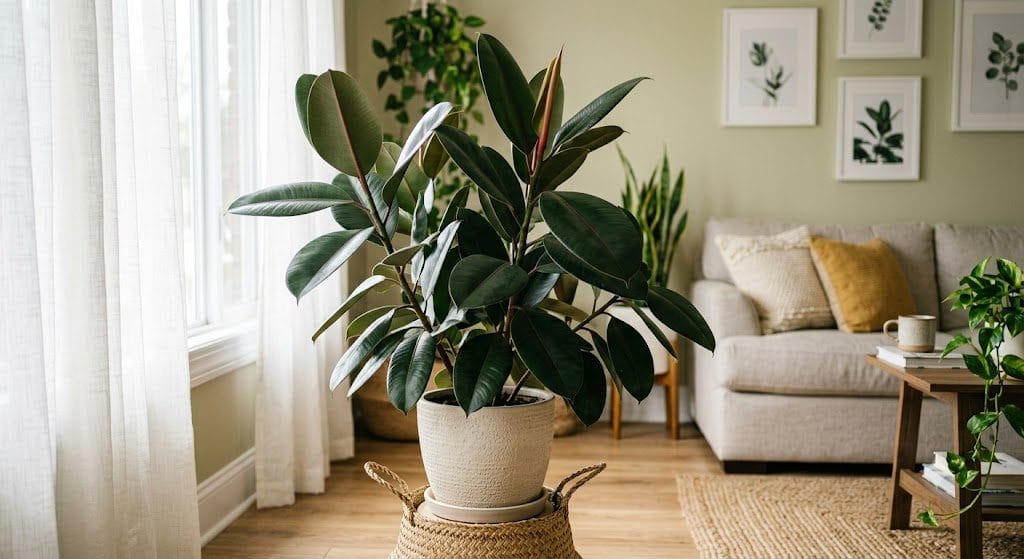
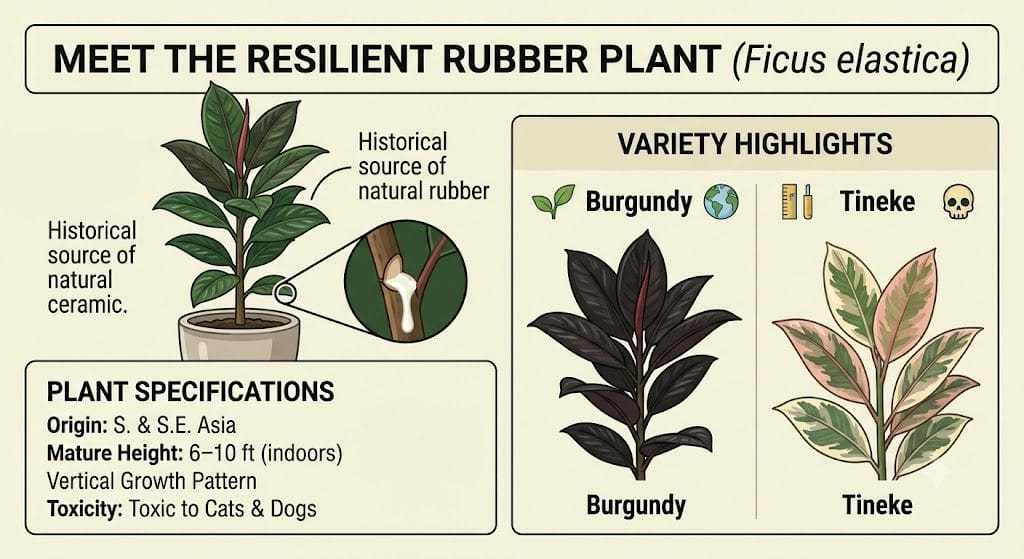
With its thick, leathery leaves and impressive, tree-like stature, the Rubber Plant brings a dramatic, moody, and sophisticated energy to any indoor space. Whether you prefer the deep, almost-black leaves of the ‘Burgundy’ variety or the watercolor-painted look of the ‘Tineke’, this sturdy tropical tree is guaranteed to turn heads. Let’s dive into everything you need to know about growing and caring for this magnificent indoor giant!
2. Quick Overview
The Rubber Plant, scientifically known as Ficus elastica, is a robust, fast-growing indoor tree beloved for its massive, glossy oval leaves. It is a member of the fig family and is native to South and Southeast Asia. As an indoor plant, it is incredibly popular because it grows straight and tall, making it perfect for filling empty corners without taking up too much floor space. It is relatively easy to care for, highly adaptable, and does an excellent job of purifying the air.
3. Plant Specifications
Here is a quick snapshot of what you need to know before bringing a Rubber Plant home:
| Specification | Details |
| Botanical Name | Ficus elastica |
| Common Name | Rubber Plant, Rubber Tree, Rubber Fig |
| Family | Moraceae (Fig family) |
| Plant Type | Evergreen broadleaf tree |
| Origin | South and Southeast Asia (India, Nepal, Malaysia, Indonesia) |
| Mature Height | 6 to 10 feet indoors (can reach 100+ feet in the wild!) |
| Mature Width | 2 to 3 feet indoors |
| Growth Rate | Fast (during warm spring and summer months) |
| Lifespan | 10 to 15+ years indoors |
| Toxicity | Toxic to cats, dogs, and humans if ingested |
| Difficulty Level | Easy to Moderate |
4. Plant History
The Rubber Plant has a fascinating history tied directly to its name. If you were to snap a leaf or cut a stem, the plant bleeds a thick, milky-white sap. Historically, long before synthetic rubber was invented, this latex sap was harvested from wild Ficus elastica trees to make natural rubber!
Native to the tropical regions of India and Malaysia, these trees grow into absolute monsters in the wild, reaching over 100 feet tall with massive, sprawling aerial roots (the famous “living root bridges” in Meghalaya, India, are made from a closely related Ficus species). It gained massive popularity as a houseplant during the Victorian era, as it was one of the few tropical plants tough enough to survive the dark, smoky conditions of 19th-century homes.
5. Why You’ll Love This Plant ❤️
There are so many reasons to make the Rubber Plant your next green obsession:
- Bold Aesthetics: The sheer size and shine of the leaves make it look incredibly luxurious and expensive.
- Vertical Growth: It grows up, not out, making it the perfect tree for small apartments or tight corners.
- Tough as Nails: It is much more forgiving than its finicky cousin, the Fiddle Leaf Fig!
- Air Purifying: Its large leaves act as massive filters, trapping dust and absorbing toxins from the air.
6. Growing Instructions
Setting your Rubber Plant up for success is all about balancing light and soil moisture.
- Best climate: Warm and moderately humid.
- Pot selection: A sturdy, heavy pot (like ceramic or terracotta) is highly recommended, as the plant can become quite top-heavy as it grows. Drainage holes are non-negotiable.
- Soil mix: A well-aerated, fast-draining potting mix.
- Watering: Allow the top half of the soil to dry out completely before watering thoroughly.
- Fertilizer: Feed with a balanced liquid houseplant fertilizer once a month during spring and summer.
- Temperature: Keep it comfortable between 65°F to 80°F (18°C – 27°C).
- Humidity: Normal room humidity is fine, but it appreciates a boost during dry winters.
- Repotting: Repot every 1 to 2 years to refresh the soil and give the roots room to expand.
- Growth speed: Very fast in ideal light; it can easily grow 2 feet in a single season!
7. Plant Care Guide
Routine care for a Rubber Plant is straightforward once you find its happy place in your home.
- Watering schedule: Typically once every 1 to 2 weeks, depending on the season and light levels.
- Fertilizer routine: Dilute your liquid fertilizer to half-strength. Do not feed during the winter when the plant is dormant.
- Cleaning leaves: This is crucial! Those massive, dark leaves show dust very quickly. Wipe them down with a damp microfiber cloth every two weeks to keep them glossy and capable of photosynthesis.
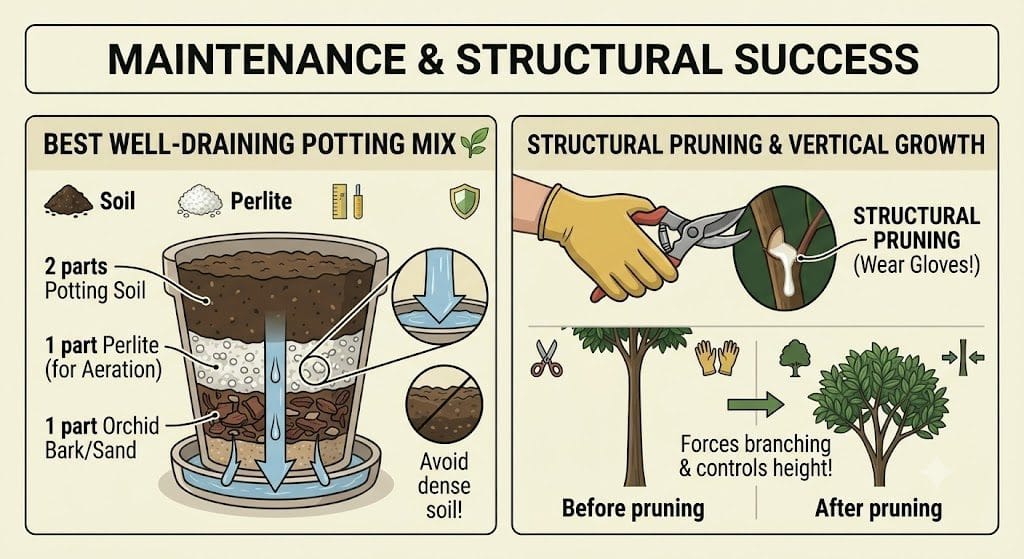
- Pruning: If your plant is getting too tall and spindly, you can cut the main stem! This forces the plant to branch out and become bushier. Always wear gloves, as the white sap can irritate your skin.
- Pest prevention: Keeping the leaves clean is your best defense against spider mites and scale insects.
- Seasonal care: Winter means less light and less growth. Cut your watering frequency in half and keep it away from cold, drafty windows.
8. Sunlight Requirements ☀️
Light is the fuel that powers this fast-growing tree.
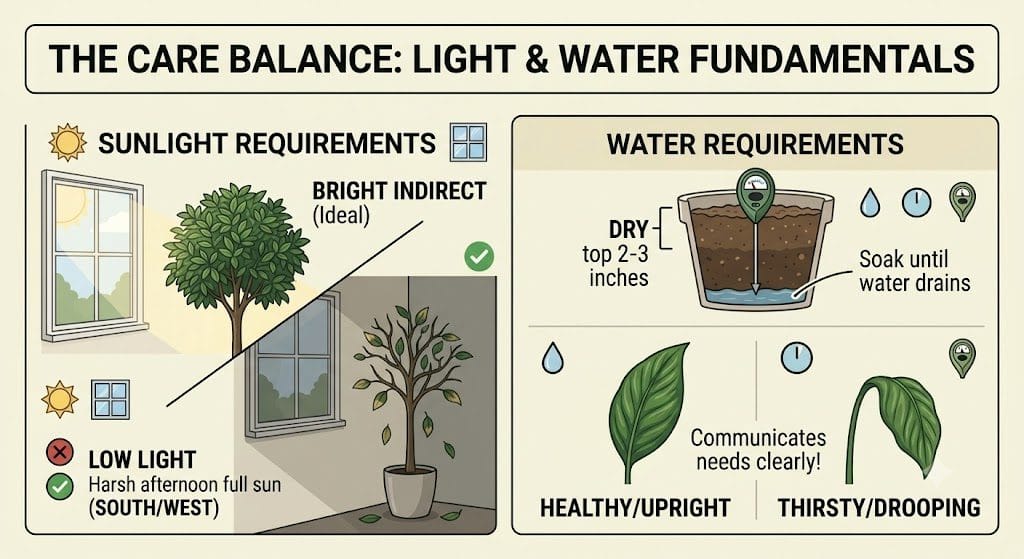
- Bright Indirect Light (Ideal): This plant wants to see the sky, but not necessarily the harsh sun. Place it near an East-facing window or a few feet back from a South or West-facing window.
- Full Sun: A little gentle morning sun is wonderful, especially for variegated varieties (like the ‘Ruby’ or ‘Tineke’). However, harsh afternoon sun will scorch the leaves and fade their dark colors.
- Partial Sun: Excellent. It thrives with a mix of shade and bright ambient light.
- Low Light: While it will survive in low light, it won’t be happy. It will stop growing, start dropping its lower leaves, and the remaining leaves will lose their vibrant colors and turn a dull, sad green.
9. Water Requirements 💧
The Rubber Plant loves a good drink, but its thick roots will rot quickly if left in standing water.
- How often to water: Wait until the top 2 to 3 inches of the soil feel completely dry to the touch. When you do water, soak it until water runs out the bottom of the pot.
- Signs of overwatering: The leaves will start turning yellow and dropping off rapidly (especially the lower ones). The soil may smell musty, and the stems might feel soft.
- Signs of underwatering: The leaves will lose their rigid, upright posture and begin to droop or fold slightly. The edges may also become crispy.
10. Soil Requirements
Because this plant is susceptible to root rot, heavy, dense soil is its worst enemy.
- Soil pH: Mildly acidic to neutral (6.0 to 7.0).
- Best potting mix: Create a well-draining mix using 2 parts high-quality potting soil, 1 part perlite, and 1 part orchid bark or coarse sand.
- Drainage needs: Essential! If your decorative pot doesn’t have a hole, keep the plant in a plastic nursery pot and take it out to water it.
11. Temperature & Humidity
Imagine a warm, breezy day in Southeast Asia—that is what your plant wants!
- Temperature: Keep it consistently warm (above 65°F/18°C). Avoid sudden temperature fluctuations. Drafts from air conditioners, heaters, or open winter doors can cause the plant to drop its leaves in shock.
- Humidity: Average household humidity (40-50%) is usually sufficient. However, if you live in a very dry climate or run the heater all winter, grouping plants together or using a humidifier will keep the leaf edges looking pristine.
12. Fertilizer Guide
Fuel that massive foliage with the right nutrients!
- Which fertilizer: A balanced, water-soluble houseplant fertilizer (like a 10-10-10 NPK).
- Frequency: Once a month.
- Best season: Only during the active growing season (Spring through late Summer). Stop entirely in Fall and Winter.
13. Easy Care Tips
Top 10 Tips for Rubber Plant Success:
- Wear Gloves to Prune: The white latex sap is incredibly sticky and can cause skin irritation.
- Wipe with Neem Oil: Once a month, wipe the leaves with a highly diluted neem oil solution to give them a brilliant shine and deter pests!
- Turn the Pot: Give the pot a quarter-turn every week. Rubber plants quickly lean toward the light, and turning it ensures a straight trunk.
- Don’t Move It: Like most Ficus trees, they hate being moved. Find a bright spot and leave it there to avoid stress-induced leaf drop.
- Prop Up Top-Heavy Plants: If it gets too tall, use a bamboo stake to support the main trunk so it doesn’t snap.
- Use a Heavy Pot: A 6-foot tall plant in a light plastic pot will easily tip over. Opt for heavy ceramic or terracotta.
- Wait to Repot: They actually don’t mind being slightly rootbound.
- Check the Sheath: New leaves emerge wrapped in a brightly colored sheath (often red or pink). Once the leaf unfurls, the sheath dries up and falls off naturally—don’t worry, the plant isn’t dying!
- More Light for Colors: Variegated varieties need significantly more light than the dark green varieties to keep their pink and white colors bright.
- The Chopstick Test: Unsure if it needs water? Push a wooden chopstick deep into the soil. If it comes out clean, it’s time to water.
14. Common Problems & Solutions
| Problem | Cause | Solution |
| Dropping lower leaves rapidly | Overwatering or a sudden change in temperature/light. | Let the soil dry out thoroughly. Ensure the plant isn’t near an AC or heating vent. |
| Leaves turning pale or yellow | Overwatering (if soil is wet) or lack of nutrients (if soil is dry). | Check the soil moisture. If dry, apply a balanced liquid fertilizer. |
| Leaves curling or drooping | Underwatering or severe root-bound stress. | Give the plant a deep, thorough watering. If water runs straight through instantly, it’s time to repot. |
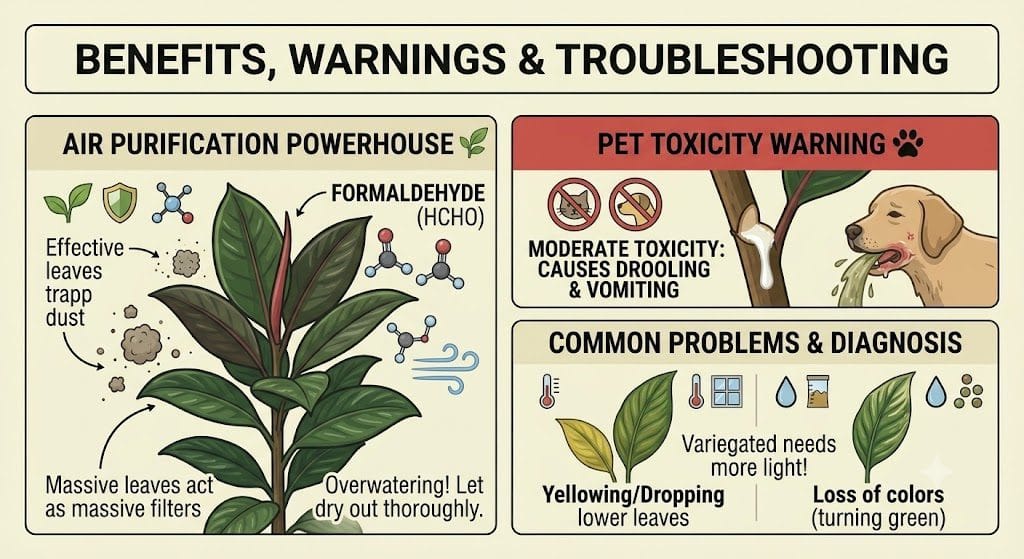
| Loss of variegation (pink/white turning green) | Not enough bright light. | Move the plant closer to a window with bright, indirect sunlight. |
15. Uses of the Plant
The Rubber Plant is an architectural powerhouse for interior design:
- Living Room Statement: Placed in a corner, it draws the eye upward, making ceilings feel higher.
- Office Decoration: Brings a commanding, professional, yet calming presence to corporate spaces.
- Modern Minimalism: The clean, stark lines of the trunk and the large, uncomplicated leaves fit perfectly with modern and mid-century decor.
- Room Divider: Grouping two or three tall Rubber Plants together can create a stunning, living privacy screen in open-concept homes.
16. Air Purification 🌿
Like many large-leafed tropicals, this tree works hard for your health.
- Does it improve air quality? Yes! It is highly effective at improving indoor air quality.
- Pollutants reduced: The Rubber Plant is particularly famous for its ability to absorb and break down formaldehyde (commonly found in furniture off-gassing and cleaning products). Its massive leaves also physically trap dust and airborne mold spores!
17. Pet Friendly? 🐶🐱
Keep this one away from the fur babies!
- Safe for Dogs? No.
- Safe for Cats? No.
- Toxicity level: Moderate.
- Precautions: Every part of the plant contains the milky white latex sap. If a pet chews on a leaf, this sap causes severe irritation in the mouth and throat, leading to drooling, vomiting, and gastrointestinal distress. It can also cause skin dermatitis if they brush against a broken stem.
18. Best Places to Keep This Plant in Your Home 🏡
- The Living Room: Next to a sofa or a media console, a tall Rubber Plant adds incredible visual weight and balance to the room.
- The Bedroom: If you have a large, bright window, placing one in the bedroom helps purify the air and adds a deeply calming, organic element.
- The Entryway: A stunning, bold welcoming statement, provided your foyer gets enough natural sunlight!
- A Sunroom: The absolute perfect environment. The bright, ambient light will cause the plant to grow massively and push out beautiful, massive leaves.
19. Tropical Vibes 🌴
While plants like ferns or palms give off a “breezy beach” vibe, the Rubber Plant brings a sense of deep, dense, ancient jungle. Its dark, heavy leaves and thick, woody trunk make a room feel grounded and lush. It pairs beautifully with natural textures like leather, wood, and woven rattan, creating an aesthetic that is less “tiki bar” and more “luxury tropical resort.”
20. Fun Facts
- The milky sap (latex) was historically used to make natural rubber, bouncing balls, and even waterproof clothing before the invention of synthetics!
- In the wild, they can grow up to 100 feet tall and develop massive, buttressed roots.
- The indigenous Khasi people of Meghalaya, India, guide the aerial roots of wild Rubber Trees across rivers to form living, growing bridges that can support the weight of 50 people!
- The bright red spike at the top of the plant isn’t a flower—it’s a protective sheath (stipule) that covers the new leaf as it develops.
- While extremely rare indoors, wild Rubber Plants produce small, inedible fig fruits.
- It belongs to the same genus (Ficus) as the Fiddle Leaf Fig, the Weeping Fig, and the edible fig you buy at the grocery store.
- If you cut the top off a Rubber Plant, it will stop growing straight up and instead push out multiple branches from the sides.
- It was one of the most popular houseplants in the world during the 1970s and has recently seen a massive resurgence in popularity.
21. Benefits
- Architectural Beauty: Provides dramatic vertical height without needing a wide footprint.
- Durable: Much more forgiving of indoor conditions than other indoor trees.
- Air Purifying: Excellent at filtering out formaldehyde and trapping dust.
- High Impact: Even a small plant quickly grows into a stunning floor plant.
- Low Maintenance: Requires infrequent watering and very little fussing once acclimated.
22. Is This Plant Good for Beginners?
Yes, with a small caveat! It is a fantastic beginner tree. If you want a large floor plant but are intimidated by the notoriously dramatic Fiddle Leaf Fig, the Rubber Plant is your answer. It is tough, resilient, and clearly communicates when it needs water (by slightly drooping). The only challenge for a complete beginner is ensuring it gets enough bright light—if you have a bright window, you will have a beautiful Rubber Plant!
23. Frequently Asked Questions (FAQs)
1. Why are the bottom leaves of my Rubber Plant falling off? It is normal for a Rubber Plant to occasionally drop an old bottom leaf as it grows taller. However, if it is dropping multiple leaves rapidly, it is almost always due to overwatering or a sudden lack of light.
2. How do I make my Rubber Plant branch out? Rubber plants naturally want to grow straight up as a single trunk. To make it bushy and branch out, you must prune it! Cut the main stem just above a leaf node; this will force the plant to grow new branches from the sides.
3. Is the white sap from a Rubber Plant dangerous? Yes, the latex sap can cause mild to moderate skin irritation and allergic reactions (especially for people with latex allergies). Always wash your hands after handling a cut stem.
4. How fast does a Rubber Plant grow? In bright, indirect light and warm temperatures, a healthy Rubber Plant can grow up to 24 inches in a single spring/summer season!
5. Why are the leaves on my Rubber Plant curling? Curling leaves usually indicate that the plant is extremely thirsty, or the air is far too dry. Check the soil moisture immediately.
6. Does the Rubber Plant need direct sunlight? No. While it can handle a little morning sun, harsh afternoon direct sunlight will burn the leaves. Bright, indirect light is best.
7. Can I propagate a Rubber Plant from a single leaf? A single leaf placed in soil might grow roots, but it will never grow into a tree because it lacks stem tissue (a node). You must take a stem cutting with at least one leaf attached to propagate a new plant!
8. Why are the leaves on my plant turning yellow? Yellowing leaves are the classic sign of overwatering and poor drainage. Ensure your pot has a hole and that you are letting the top few inches of soil dry out between waterings.
9. How do I keep the leaves looking shiny? Dust them regularly! Wipe the top and bottom of the leaves with a damp cloth every two weeks. You can add a drop of mild dish soap or highly diluted neem oil for extra shine.
10. Is the Rubber Plant safe for cats and dogs? No. The plant is toxic if chewed or swallowed, causing intense mouth irritation and vomiting.
24. Final Verdict
If you are looking to elevate your indoor space with a plant that commands attention, the Rubber Plant is an unmatched choice. It brings the perfect blend of dramatic architectural height, glossy, colorful foliage, and robust hardiness. While it requires a bright spot and a careful hand with the watering can, the reward is a stunning, living piece of art that will purify your air and grow alongside you for years to come.